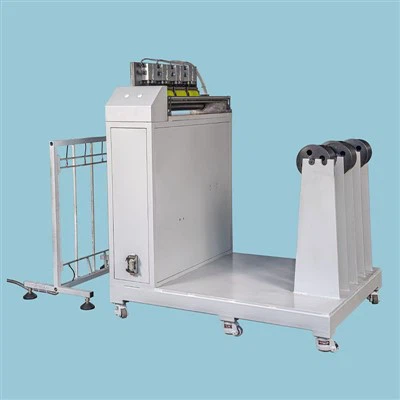
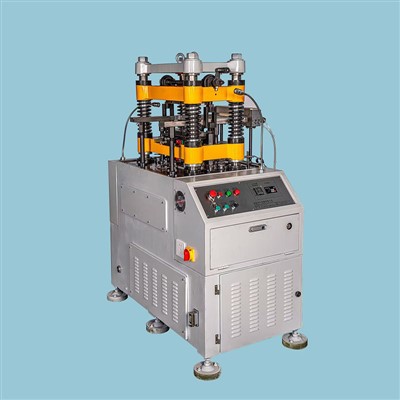
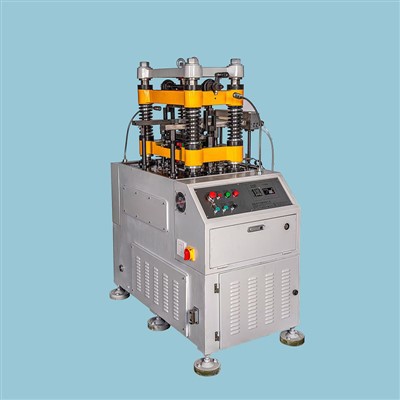
As a supplier of Universal Auto Material Feeders, I've witnessed firsthand the challenges and intricacies of handling different material densities. In the dynamic world of industrial automation, the ability of a feeder to adapt to various material densities is not just a luxury; it's a necessity. This blog post will delve into the mechanisms and strategies that enable our Universal Auto Material Feeders to adjust to different material densities effectively.
Understanding Material Density
Before we explore how our feeders adapt, it's crucial to understand what material density means. Material density is defined as the mass of a material per unit volume. Different materials, such as plastics, metals, and composites, have distinct densities. For instance, aluminum has a relatively low density compared to steel. Even within the same material type, variations in density can occur due to factors like composition, manufacturing processes, and temperature.
In an industrial setting, these density differences can pose significant challenges for material feeding systems. If a feeder is not properly calibrated to the density of the material, it can lead to inconsistent feeding rates, overfeeding, or underfeeding. These issues can, in turn, affect the quality of the final product, increase waste, and reduce overall productivity.
Mechanisms for Density Adjustment
Our Universal Auto Material Feeders are equipped with several mechanisms to ensure they can handle a wide range of material densities. One of the primary methods is through the use of adjustable feeding parameters. These parameters include the speed of the feeder, the force applied to the material, and the opening size of the feeder chute.
Adjustable Feeding Speed
The feeding speed of our feeder can be precisely controlled to match the density of the material. For denser materials, a slower feeding speed is often required to prevent overloading the system. Conversely, less dense materials can be fed at a higher speed. Our feeders are designed with variable speed drives that allow operators to adjust the speed according to the specific requirements of the material. This flexibility ensures that the feeder can maintain a consistent feeding rate regardless of the material density.
Force Application
Another important factor in density adjustment is the force applied to the material. Denser materials typically require more force to move through the feeder. Our feeders are equipped with adjustable force mechanisms that can be tailored to the density of the material. For example, a hydraulic or pneumatic system can be used to apply the appropriate amount of force to push the material through the feeder. This ensures that the material is fed smoothly and consistently, even if it has a high density.
Chute Opening Size
The size of the feeder chute opening also plays a crucial role in density adjustment. For denser materials, a smaller chute opening may be necessary to prevent the material from flowing too quickly and causing blockages. On the other hand, less dense materials may require a larger chute opening to allow for a more efficient flow. Our feeders are designed with adjustable chute openings that can be easily modified to accommodate different material densities.
Sensor Technology
In addition to the adjustable feeding parameters, our Universal Auto Material Feeders are also equipped with advanced sensor technology. These sensors can detect the density of the material in real-time and automatically adjust the feeding parameters accordingly.
Density Sensors
Density sensors are used to measure the density of the material as it enters the feeder. These sensors work by measuring the mass and volume of the material and calculating its density. Based on the density reading, the feeder can adjust the feeding speed, force, and chute opening size to ensure optimal feeding performance.
Flow Sensors
Flow sensors are another important component of our feeder system. These sensors monitor the flow rate of the material through the feeder and can detect any changes in the flow rate. If the flow rate is too high or too low, the feeder can adjust the feeding parameters to maintain a consistent flow. This helps to prevent overfeeding or underfeeding, which can lead to quality issues and production delays.
Software and Control Systems
Our Universal Auto Material Feeders are also integrated with sophisticated software and control systems. These systems allow operators to program the feeder to adjust to different material densities automatically.
Programmable Logic Controllers (PLCs)
PLCs are used to control the operation of the feeder and to adjust the feeding parameters based on the density of the material. Operators can program the PLC to recognize different material densities and to adjust the feeding speed, force, and chute opening size accordingly. This automation reduces the need for manual intervention and ensures consistent feeding performance.
Human-Machine Interface (HMI)
The HMI provides operators with a user-friendly interface to monitor and control the feeder. Operators can view real-time data on the density of the material, the feeding speed, and the force applied to the material. They can also make adjustments to the feeding parameters as needed. The HMI also provides diagnostic information and alerts to help operators troubleshoot any issues that may arise.
Case Studies
To illustrate the effectiveness of our Universal Auto Material Feeders in adjusting to different material densities, let's look at a few case studies.
Case Study 1: Plastic Injection Molding
A plastic injection molding company was experiencing issues with inconsistent feeding of different types of plastic resins. The company was using a traditional feeder that was not able to adjust to the different densities of the resins. As a result, the quality of the molded parts was inconsistent, and there was a high rate of scrap.
The company decided to switch to our Universal Auto Material Feeder. The feeder was equipped with adjustable feeding parameters and density sensors. The density sensors were able to detect the density of the plastic resins in real-time and adjust the feeding speed and force accordingly. As a result, the company was able to achieve a consistent feeding rate, improve the quality of the molded parts, and reduce the scrap rate.
Case Study 2: Metal Stamping
A metal stamping company was using a feeder to supply metal sheets to a stamping press. The company was using different types of metal sheets with varying densities. The traditional feeder was not able to handle the different densities, and the metal sheets were often misaligned or jammed in the feeder.


The company installed our Universal Auto Material Feeder. The feeder was equipped with adjustable chute openings and flow sensors. The adjustable chute openings were able to accommodate the different thicknesses and densities of the metal sheets, and the flow sensors were able to monitor the flow rate of the sheets and adjust the feeding speed accordingly. As a result, the company was able to achieve a smooth and consistent feeding of the metal sheets, improve the efficiency of the stamping process, and reduce the downtime caused by jams.
Conclusion
In conclusion, our Universal Auto Material Feeders are designed to adapt to different material densities effectively. Through the use of adjustable feeding parameters, sensor technology, and sophisticated software and control systems, our feeders can maintain a consistent feeding rate regardless of the material density. This flexibility ensures that our customers can achieve optimal productivity, improve the quality of their products, and reduce waste.
If you're looking for a reliable and efficient material feeding solution that can handle different material densities, look no further than our Universal Auto Material Feeders. We also offer a range of related products, such as the Industrial Auto Loader, High-Speed Auto Loading Machine, and Automatic Roll Feeder. To learn more about our products and how they can benefit your business, please contact us to start a procurement discussion.
References
- Smith, J. (2020). Industrial Automation: Principles and Applications. New York: Wiley.
- Jones, R. (2019). Material Handling in Manufacturing. London: Elsevier.
- Brown, S. (2018). Feeding Systems for Industrial Processes. Chicago: McGraw-Hill.