Can a Servo Shear Cutter be used for cutting composite materials?
As a supplier of Servo Shear Cutters, I often encounter inquiries about the versatility of our products, particularly regarding their suitability for cutting composite materials. In this blog post, I'll delve into the technical aspects, advantages, and limitations of using a Servo Shear Cutter for cutting composites.
Understanding Composite Materials
Composite materials are engineered by combining two or more distinct materials with different physical or chemical properties. The resulting material has characteristics that are superior to those of the individual components. Common examples of composites include carbon fiber - reinforced polymers (CFRP), glass fiber - reinforced polymers (GFRP), and aramid fiber - reinforced polymers. These materials are widely used in aerospace, automotive, marine, and sports industries due to their high strength - to - weight ratio, corrosion resistance, and excellent mechanical properties.
Working Principles of a Servo Shear Cutter
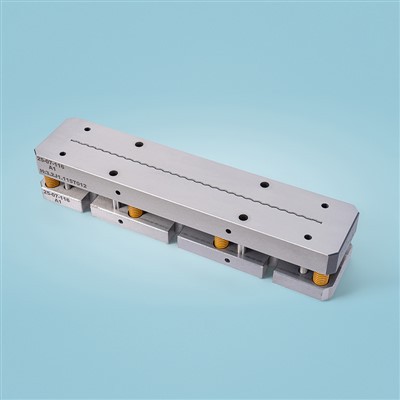
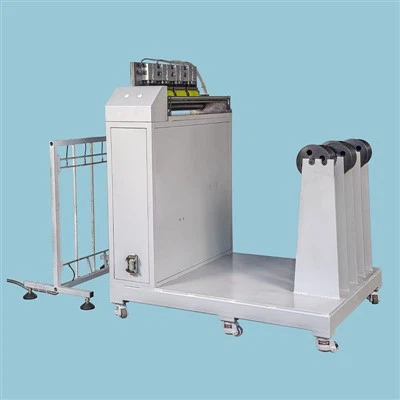
A Servo Shear Cutter is a precision cutting device that utilizes a servo - motor system to control the cutting process. The servo - motor provides accurate and repeatable motion, allowing for precise control of the cutting blade's speed, position, and force. This type of cutter typically consists of a fixed blade and a moving blade. The material to be cut is placed between the two blades, and the moving blade is driven by the servo - motor to perform a shearing action, effectively cutting through the material.
Advantages of Using a Servo Shear Cutter for Composite Materials
Precision Cutting
One of the primary advantages of a Servo Shear Cutter is its ability to provide high - precision cuts. The servo - motor control system allows for accurate positioning of the cutting blade, ensuring that the cuts are made with minimal deviation from the desired dimensions. This is crucial when working with composite materials, as even small inaccuracies can compromise the structural integrity of the final product. For example, in aerospace applications, where tight tolerances are required, a servo shear cutter can produce cuts with an accuracy of up to ±0.1 mm.
Repeatability
Servo shear cutters offer excellent repeatability, meaning that the same cutting operation can be performed consistently over multiple cycles. This is essential for mass production of composite parts, as it ensures that each part meets the same quality standards. The servo - motor system can be programmed to execute the cutting process with the same parameters every time, reducing the risk of human error and improving overall productivity.
Versatility
Servo shear cutters can be configured to handle a variety of composite materials and thicknesses. By adjusting the cutting speed, force, and blade geometry, the cutter can be optimized for different types of composites. For instance, when cutting thin carbon fiber sheets, a lower cutting force and higher speed may be required to prevent delamination, while thicker glass fiber composites may need a higher cutting force.
Reduced Material Waste
The precise cutting capabilities of a servo shear cutter result in reduced material waste. The accurate positioning of the blade minimizes the amount of excess material that needs to be trimmed, making the cutting process more cost - effective. This is particularly important for high - cost composite materials, where even a small reduction in waste can lead to significant savings.


Limitations of Using a Servo Shear Cutter for Composite Materials
Fiber Pull - Out and Delamination
One of the main challenges when cutting composite materials with a servo shear cutter is the potential for fiber pull - out and delamination. The shearing action of the blades can cause the fibers in the composite to separate from the matrix, resulting in a rough cut edge and reduced mechanical properties. This is especially true for composites with high fiber content or brittle matrices. To mitigate this issue, it may be necessary to use specialized blade designs or cutting techniques, such as pre - scoring the material or using a lubricant.
Heat Generation
The cutting process can generate heat, which can be a problem for some composite materials. Excessive heat can cause the resin matrix to melt or degrade, leading to changes in the material's properties. Servo shear cutters can be equipped with cooling systems to dissipate heat, but this adds to the complexity and cost of the equipment.
Limited Cutting Thickness
The cutting capacity of a servo shear cutter is limited by the strength of the blades and the power of the servo - motor. While servo shear cutters can handle a range of composite thicknesses, there is a practical limit to how thick a material can be cut. For very thick composite materials, alternative cutting methods, such as waterjet cutting or laser cutting, may be more suitable.
Case Studies
To illustrate the practical application of servo shear cutters for cutting composite materials, let's look at a few case studies.
Aerospace Industry
In the aerospace industry, carbon fiber - reinforced composites are widely used for manufacturing aircraft components. A servo shear cutter was used to cut CFRP sheets for the production of wing spars. The cutter was able to provide precise cuts with minimal fiber pull - out, ensuring the structural integrity of the spars. The repeatability of the cutting process also allowed for efficient mass production, meeting the high - volume requirements of the aerospace industry.
Automotive Industry
In the automotive industry, glass fiber - reinforced composites are used for various parts, such as body panels and interior components. A servo shear cutter was employed to cut GFRP sheets for the production of car door panels. The cutter's versatility allowed it to handle different thicknesses of the composite material, and the precise cuts resulted in a high - quality finish. The reduced material waste also contributed to cost savings for the automotive manufacturer.
Conclusion
In conclusion, a Servo Shear Cutter can be a viable option for cutting composite materials, offering precision, repeatability, versatility, and reduced material waste. However, it also has its limitations, such as the potential for fiber pull - out, heat generation, and limited cutting thickness. When considering using a servo shear cutter for composite cutting, it is important to evaluate the specific requirements of the application and choose the appropriate cutter and cutting parameters.
If you are interested in exploring the use of a Servo Shear Cutter for your composite cutting needs, we invite you to contact us for a detailed discussion. Our team of experts can provide you with more information about our products, offer technical support, and help you find the best solution for your application.
References
- "Composite Materials: Design and Applications" by Isaac M. Daniel and Ori Ishai
- "Cutting Technologies for Composite Materials" by John S. D. Davies