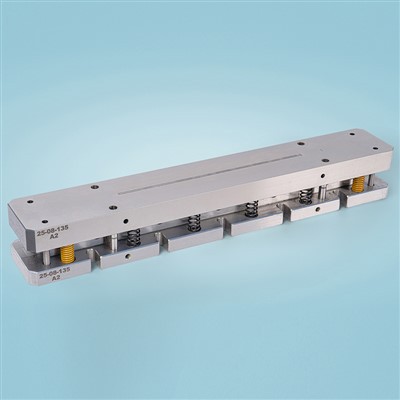
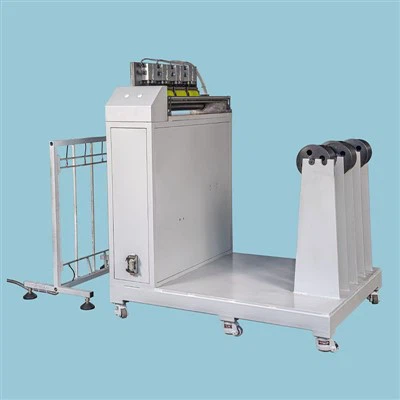
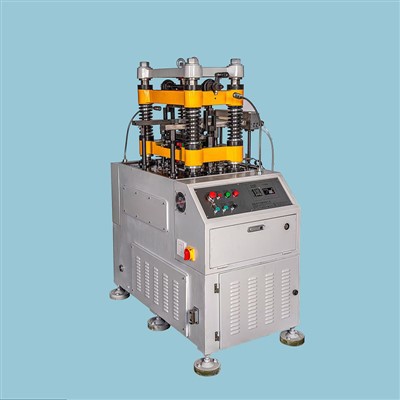
Hey there! As a supplier of radiator fin forming machines, I'm super stoked to share with you all the technical parameters that make these machines tick. Whether you're in the market for a new machine or just curious about how they work, this blog post is for you.
Material Compatibility
First off, let's talk about the types of materials these machines can handle. We've got a range of options to suit different needs. One of our popular machines is the Alloy Fin Forming Machine. This bad boy can work with various alloy materials, which are known for their excellent heat transfer properties and durability.


Then there's the Stainless Steel Fin Forming Machine. Stainless steel is a go - to material for many applications because it's corrosion - resistant. So, if you're dealing with environments where rust is a concern, this machine is your friend.
And for those who need to work on heat exchangers, our Heat Exchanger Fin Forming Machine is designed to handle the specific requirements of heat exchanger fins. It can process materials that are optimized for efficient heat transfer.
Fin Dimensions
The dimensions of the fins produced by the machine are a crucial parameter. The height of the fins can vary depending on the application. For example, in some high - performance radiators, you might need taller fins to increase the surface area for better heat dissipation. Our machines can be adjusted to produce fins with heights ranging from a few millimeters to several centimeters.
The pitch, which is the distance between adjacent fins, is also important. A smaller pitch means more fins per unit length, which can enhance heat transfer but might also increase the pressure drop. Our machines can achieve a wide range of pitch settings, allowing you to find the perfect balance for your specific needs.
The thickness of the fins is another key factor. Thinner fins can be more efficient in terms of heat transfer, but they also need to be strong enough to withstand the operating conditions. Our machines can handle fin thicknesses from very thin, like 0.1 mm, up to thicker gauges depending on the material.
Production Speed
Production speed is a big deal, especially if you're running a large - scale manufacturing operation. Our radiator fin forming machines are designed to be fast and efficient. The speed is usually measured in the number of fins produced per minute. Depending on the complexity of the fin design and the material being used, our machines can produce anywhere from a few dozen to several hundred fins per minute.
For simple fin designs and common materials, the production speed can be on the higher end. But if you're working on more intricate fin patterns or using tougher materials, the speed might be a bit slower. However, we've optimized our machines to ensure that even in these cases, the production rate is still competitive.
Precision and Accuracy
When it comes to making radiator fins, precision and accuracy are non - negotiable. The fins need to be uniform in size and shape to ensure proper heat transfer and fit within the radiator assembly. Our machines are equipped with advanced control systems that can achieve high levels of precision.
The tolerance for fin dimensions, such as height, pitch, and thickness, is very tight. We can typically achieve tolerances within a few hundredths of a millimeter. This means that the fins produced by our machines are consistent and meet the strictest quality standards.
Power Requirements
Power is what keeps these machines running. The power requirements of our radiator fin forming machines depend on several factors, including the size of the machine, the production speed, and the type of material being processed.
Smaller machines might require less power, maybe in the range of a few kilowatts. But larger, high - speed machines can consume tens of kilowatts. We make sure to provide detailed power consumption information for each of our machines so that you can plan your electrical infrastructure accordingly.
Machine Size and Footprint
The size of the machine and its footprint are important considerations, especially if you have limited space in your factory. Our machines come in different sizes to accommodate various production needs.
Smaller machines are more compact and can be easily integrated into existing production lines. They have a relatively small footprint, which is great for small - scale operations or factories with limited floor space.
Larger machines, on the other hand, are designed for high - volume production. They might take up more space, but they offer higher production speeds and can handle larger coils of material.
Control System
The control system of our radiator fin forming machines is user - friendly and intuitive. It allows operators to easily adjust the machine settings, such as fin dimensions, production speed, and pitch.
We use advanced touch - screen interfaces that make it simple to input the desired parameters. The control system also provides real - time feedback on the machine's performance, such as the number of fins produced, the current production speed, and any error messages.
Maintenance Requirements
Maintenance is an important aspect of keeping your machine running smoothly. Our radiator fin forming machines are designed with easy maintenance in mind.
The moving parts are easily accessible, which makes it simple to clean and lubricate them. We also provide detailed maintenance manuals that outline the recommended maintenance schedule and procedures.
Regular maintenance can help extend the lifespan of the machine and ensure that it continues to produce high - quality fins.
Conclusion
So, there you have it - the key technical parameters of a radiator fin forming machine. These machines are complex pieces of equipment, but understanding these parameters can help you make an informed decision when choosing the right machine for your needs.
If you're interested in learning more about our radiator fin forming machines or have any questions about the technical parameters, feel free to reach out. We're here to help you find the perfect solution for your manufacturing requirements. Let's start a conversation and see how we can work together to take your radiator fin production to the next level.
References
- Industry standards for radiator fin manufacturing
- Technical documentation of our radiator fin forming machines