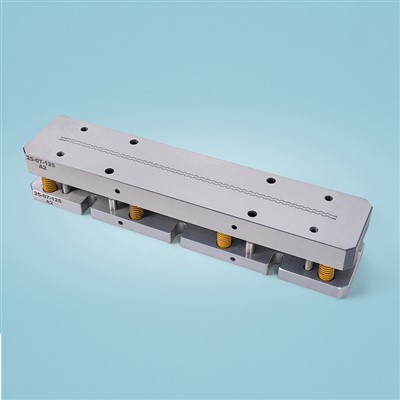
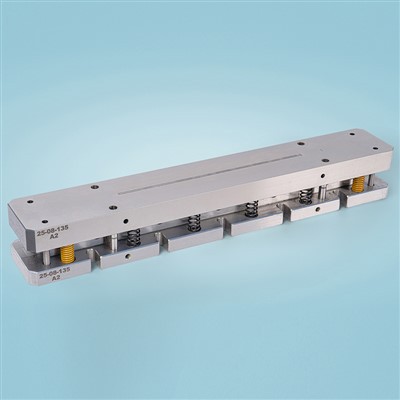
Hey there! I'm a supplier of Corrugated Die, and today I want to spill the beans on the milling process for a corrugated die. It's a fascinating journey from raw material to a precision - made tool, and I'm stoked to share it with you.
Let's start at the beginning. Before we even touch the milling machine, we need to pick the right material for the corrugated die. Usually, we opt for high - quality steel. This steel has to be tough enough to withstand the pressure and wear that comes with the stamping process. We're talking about a material that can handle repeated impacts and still keep its shape.
Once the material is selected, it's time to prep it for milling. We start by cutting the steel into a rough shape that's close to the final dimensions of the corrugated die. This rough cutting is like laying the foundation of a house. It gives us a starting point and makes the subsequent milling steps more efficient.
Now, onto the actual milling process. Milling for a corrugated die is all about precision. We use a milling machine, which is a super - cool piece of equipment. It has a rotating cutter that removes material from the steel block to create the desired shape.
The first step in the milling process is to create the basic corrugated pattern. The cutter moves along the surface of the steel, following a pre - programmed path. This path is designed to create the characteristic ridges and valleys of the corrugated die. It's like an artist using a brush to paint a masterpiece, except instead of paint, we're removing steel.
One of the key aspects of this part of the process is the depth and width of the corrugations. These dimensions are crucial because they determine how well the die will work. If the corrugations are too shallow or too narrow, the stamping won't be effective. On the other hand, if they're too deep or wide, it can cause problems with the material being stamped. So, we have to be really careful and precise when setting up the milling machine.
As the cutter moves along, it creates chips of steel. We need to make sure these chips are removed from the work area quickly. If they build up, they can interfere with the milling process and even damage the cutter. That's why most milling machines have a coolant system. The coolant not only helps to keep the cutter cool but also flushes away the chips.
After the basic corrugated pattern is milled, we may need to do some secondary operations. This could include adding special features to the die, like holes or slots. These features can be used for things like alignment during the stamping process or for attaching the die to the stamping machine.
The precision of the milling process also means that we have to pay close attention to the surface finish. A smooth surface finish is important because it reduces friction during the stamping process. It also helps to prevent the material being stamped from sticking to the die. To achieve a good surface finish, we may use different types of cutters or perform additional finishing operations, like polishing.
Now, let's talk about the importance of quality control during the milling process. We can't just rely on the machine to do everything perfectly. We have to check the dimensions and the quality of the corrugated die at regular intervals. We use tools like calipers and micrometers to measure the depth, width, and other critical dimensions of the corrugations. If we find any deviations from the specifications, we can make adjustments to the milling machine right away.


Another thing that affects the milling process is the type of corrugated die we're making. For example, a Staggered - tooth Die has a different pattern compared to a standard corrugated die. The milling process has to be adjusted accordingly to create the unique staggered - tooth pattern. This requires a high level of skill and expertise from our milling operators.
Similarly, Press Brake Louver Dies have their own specific requirements. The milling process for these dies has to be tailored to create the louvered pattern accurately. Each type of die presents its own set of challenges, but that's what makes this job so interesting!
As a Corrugated Die supplier, we're always looking for ways to improve the milling process. We invest in the latest milling technology and software to make the process more efficient and accurate. Newer machines can handle complex patterns more easily and can reduce the time it takes to mill a die.
Moreover, we train our milling operators regularly. They need to stay up - to - date with the latest techniques and best practices in the industry. This ensures that we can consistently produce high - quality corrugated dies for our customers.
The cost of producing a corrugated die through the milling process is also an important consideration. We have to balance the quality of the die with the cost of production. We try to optimize the milling process to reduce waste and minimize the time spent on each die. This way, we can offer our customers competitive prices without sacrificing quality.
If you're in the market for a Corrugated Die, you'll want to work with a supplier who understands the intricacies of the milling process. A well - milled corrugated die can make a huge difference in the quality and efficiency of your stamping operations. It can reduce downtime, improve the quality of your stamped products, and ultimately save you money in the long run.
So, whether you're a small business looking for a custom - made corrugated die or a large manufacturer in need of a high - volume supply, we're here to help. We've got the expertise, the technology, and the passion to create the perfect corrugated die for your specific needs.
If you're interested in learning more or want to start a conversation about your corrugated die requirements, don't hesitate to reach out. We're always happy to discuss your project and provide you with a quote. Let's work together to take your stamping operations to the next level!
References
- General knowledge of metalworking and die - making processes
- Industry experience in corrugated die production