What is the production cost of using a Condenser Fin Forming Machine?
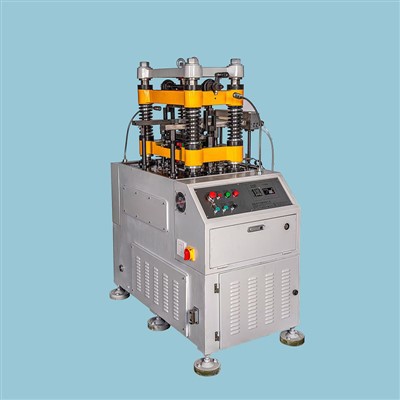
As a supplier of Condenser Fin Forming Machines, I've witnessed firsthand the growing demand for these machines in the manufacturing industry. Condenser fin forming machines play a crucial role in producing high - quality fins for condensers, which are essential components in various cooling and heating systems. Understanding the production cost of using these machines is vital for both manufacturers and potential buyers.
1. Initial Investment
The first significant cost associated with using a Condenser Fin Forming Machine is the initial purchase price. The price of these machines can vary widely depending on several factors. For instance, the machine's capacity, precision, and automation level have a direct impact on its cost. A basic, manually - operated Condenser Fin Forming Machine may cost around $10,000 - $20,000. On the other hand, a high - end, fully automated machine with advanced features such as computer - controlled operation and high - speed production capabilities can cost upwards of $100,000.
When considering the initial investment, it's also important to account for additional costs such as shipping, installation, and training. Shipping costs can vary depending on the distance between the supplier and the buyer. Installation usually requires professional technicians, and their service fees need to be factored into the overall cost. Training the operators to use the machine safely and efficiently is also necessary, and this may involve on - site training provided by the supplier or sending the operators to the supplier's facilities for training.
2. Raw Material Costs
The raw materials used in condenser fin production are a major part of the production cost. The most common materials for condenser fins are aluminum, copper, stainless steel, and various alloys. Each material has its own price range and properties.
Aluminum is widely used due to its relatively low cost, light weight, and good heat transfer properties. The price of aluminum fluctuates in the global market, but on average, it can cost around $1 - $3 per kilogram. Copper, on the other hand, has excellent heat transfer capabilities but is more expensive, with prices ranging from $6 - $10 per kilogram.
Stainless steel fins are used in applications where corrosion resistance is required. If you are interested in a Stainless Steel Fin Forming Machine, it can help you produce high - quality stainless steel fins. The cost of stainless steel is generally higher than aluminum, usually around $3 - $8 per kilogram. Alloys offer a balance between cost and performance, and an Alloy Fin Forming Machine can be used to produce fins from different alloy materials.


In addition to the material cost per unit, the waste generated during the production process also affects the overall cost. Inefficient cutting and forming processes can result in a significant amount of scrap material, which increases the cost per fin produced.
3. Energy Consumption
Condenser Fin Forming Machines consume a considerable amount of energy during operation. The energy consumption mainly depends on the machine's power rating and the production volume. Most machines are powered by electricity, and the cost of electricity varies by region.
For example, in some areas, the cost of electricity may be around $0.1 - $0.2 per kilowatt - hour. A medium - sized Condenser Fin Forming Machine with a power rating of 10 kilowatts running for 8 hours a day will consume 80 kilowatt - hours of electricity per day. At a rate of $0.15 per kilowatt - hour, the daily electricity cost will be $12. Over a month (assuming 22 working days), the electricity cost will be $264.
To reduce energy consumption, some modern Condenser Fin Forming Machines are designed with energy - saving features such as variable - speed drives and efficient motor systems. These features can significantly lower the energy cost over the long term.
4. Labor Costs
Labor is another important component of the production cost. The number of operators required to run a Condenser Fin Forming Machine depends on the machine's automation level. A fully automated machine may only require one operator to monitor the production process, while a semi - automated or manual machine may need two or more operators.
The labor cost varies depending on the region and the skill level of the operators. In some developing countries, the hourly wage for a machine operator may be around $5 - $10, while in developed countries, it can be $20 - $50 or more per hour. If a machine requires two operators working an 8 - hour shift, and the hourly wage is $15, the daily labor cost will be $240.
5. Maintenance and Repair Costs
Regular maintenance is essential to keep the Condenser Fin Forming Machine in good working condition and to ensure the quality of the produced fins. Maintenance costs include the cost of spare parts, lubricants, and the labor for maintenance work.
Spare parts such as cutting blades, rollers, and gears need to be replaced periodically. The cost of these spare parts can vary depending on the machine model and the manufacturer. Lubricants are also necessary to reduce friction and wear in the machine, and their cost should be considered.
In addition to regular maintenance, unexpected breakdowns may occur, and repair costs can be significant. The cost of repair depends on the nature and severity of the problem. For minor repairs, the cost may be a few hundred dollars, while major repairs can cost several thousand dollars.
6. Depreciation
The value of the Condenser Fin Forming Machine decreases over time due to wear and tear, technological advancements, and market factors. Depreciation is an important cost that needs to be considered in the overall production cost.
The depreciation rate can be calculated using different methods, such as the straight - line method or the declining - balance method. For example, if a machine costs $50,000 and has a useful life of 10 years, using the straight - line method, the annual depreciation cost will be $5,000.
In conclusion, the production cost of using a Condenser Fin Forming Machine is composed of multiple factors, including the initial investment, raw material costs, energy consumption, labor costs, maintenance and repair costs, and depreciation. By carefully analyzing these costs, manufacturers can make informed decisions about their production processes and pricing strategies.
If you are in the market for a high - quality Condenser Fin Forming Machine, or if you are interested in our Heat Exchanger Fin Forming Machine, please feel free to contact us for more information and to discuss your specific requirements. We are committed to providing you with the best solutions at competitive prices.
References
- Manufacturing Cost Analysis: A Guide for Small and Medium - Sized Enterprises. Industry Canada.
- Handbook of Heat Exchanger Design. CRC Press.