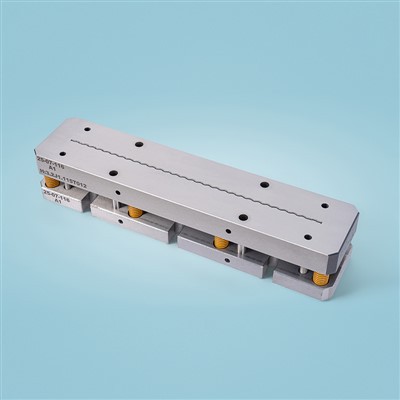
When evaluating cutting equipment for heat exchanger fin production, the differences between servo cutters and traditional mechanical cutters are clear, particularly in terms of precision and reliability. Mechanical cutters rely on fixed gears, cams, and belts to drive the cutting process. Over time, this can lead to wear, backlash, and inconsistent performance. These systems often require frequent calibration and maintenance to maintain accuracy, resulting in increased downtime and higher long - term costs.
Servo cutters, by contrast, use direct - drive servo motors with closed - loop control, eliminating the need for mechanical linkages and reducing wear to nearly zero. This results in more consistent cuts, a longer machine lifespan, and minimal maintenance requirements.
Performance under load is another key distinction. Mechanical cutters often struggle with varying material thicknesses or high - density fin materials, leading to uneven cuts or jams. Servo cutters, with their variable torque control, can adapt to different materials, adjusting speed and force in real time to ensure clean, smooth cuts.
Programmability is also a major advantage. Servo cutters can store multiple cutting profiles, allowing for quick changeovers between products. In contrast, mechanical cutters require manual adjustment of gears and cams, a process that can take hours.
For manufacturers prioritizing efficiency and quality, servo cutters offer a clear upgrade over traditional mechanical alternatives. With lower long-term operating costs, less unplanned downtime, and greater flexibility to accommodate diverse production orders, they align perfectly with the demands of modern high-volume, high-variation heat exchanger manufacturing. As production requirements for fin dimensions and quality continue to tighten, the precision and adaptability of servo cutting technology make it a more future-proof investment that delivers sustained improvements to overall production output and end-product performance.