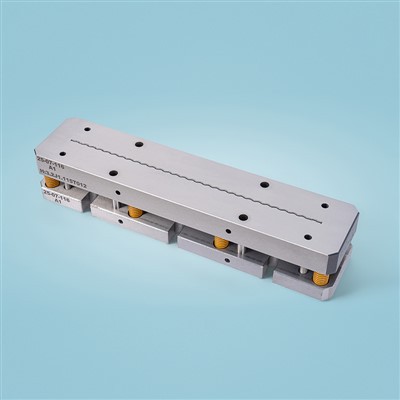
In the mold industry, "best methods" are not just about a single technique, but a systematic approach that permeates the entire process from design and material selection to manufacturing, use, and maintenance.The core objective is to balance molding accuracy, production stability, cost control, and lifespan, allowing the mold to perform at its maximum efficiency in various application scenarios. Understanding and implementing these methods can help companies achieve a better balance between quality and efficiency in a competitive market.
Design is the primary step in establishing mold performance. Best methods emphasize being guided by product function and process requirements, using 3D modeling and simulation analysis to anticipate potential problems during the molding process. For example, in injection mold design, observing the melt filling path and cooling distribution through mold flow analysis can optimize the gate location and cooling channel layout, reducing the risk of short shots, warpage, and shrinkage marks. For complex curved surfaces or thin-walled parts, conformal cooling technology should be used to ensure uniform mold temperature and shorten the cycle time. The design phase should also include reasonable draft angles and ejection structures to prevent uneven stress on the product during demolding, which could lead to deformation or breakage.
Material selection and heat treatment determine the durability and stability of the mold. The best approach advocates rationally matching the mold steel type according to the material's intended use and production volume-high-hardness, high-wear-resistant alloy tool steel is suitable for mass production, and should undergo vacuum heat treatment and surface strengthening to improve wear and fatigue resistance; for small batches or trial production, easily machinable materials can be used to reduce costs. Simultaneously, the material's adaptability to molding temperatures must be considered to avoid cavity softening or dimensional drift due to insufficient heat resistance.
Precision control in the manufacturing process is key to achieving the best approach. Technologies such as high-speed milling, EDM, and laser texturing can ensure that the shape and surface quality of complex cavities meet design requirements. A strict tolerance system and inspection process should be established during processing, with multiple checks of critical dimensions to prevent cumulative errors from affecting product consistency. For multi-cavity molds, consistent machining of each cavity is particularly important; otherwise, product weight and dimensional fluctuations will occur.
In the usage stage, the best approach is reflected in scientific process parameter settings and standardized operation. The appropriate injection or pressing speed, pressure, and temperature should be determined based on material properties and mold structure to avoid mold damage caused by overload operation. Regular cleaning of the cavity and ejection mechanism, and inspection of guide wear, can prevent scratches from impurities or malfunctions. For molds used in long-term continuous production, the flow rate and temperature of the cooling system should also be monitored to ensure stable thermal management.
Maintenance and repair are essential measures to extend mold life. The best approach is to establish maintenance records, documenting each maintenance and repair, and to develop preventative maintenance plans based on production volume and operating environment. When localized wear or damage occurs, repairs can be made by local welding, laser cladding, or replacement of inserts, avoiding the high costs associated with complete mold scrapping.