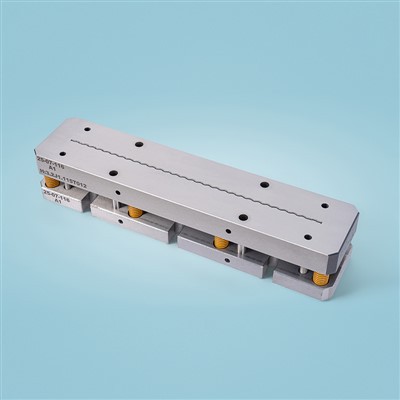
As a fundamental process equipment in manufacturing, the application prospects of molds are closely linked to industrial upgrading and the expansion into emerging fields. With the global manufacturing industry transforming towards intelligent, refined, and green manufacturing, the role of molds is no longer limited to traditional mass production, but extends to high-end equipment, new energy, medical and health, and personalized manufacturing, demonstrating broad market potential and technological vitality.
In the field of new materials processing, molds are ushering in new application opportunities. The widespread use of new materials such as carbon fiber composites, biodegradable plastics, and high-performance ceramics places higher demands on the temperature resistance, corrosion resistance, and surface precision of molds, prompting continuous optimization of mold materials and structures. For example, the compression molding of carbon fiber prepregs requires molds with uniform hot-pressing distribution and low-adhesion surface treatment to avoid fiber damage and ensure consistent product strength. These demands have driven the research and development of high-temperature alloys and special coatings, enabling molds to enter the core supply chain of aerospace and high-end transportation equipment manufacturing.
The rapid development of the new energy industry has opened up continuous growth points for molds. Products such as power battery casings, photovoltaic module frames, and hydrogen energy storage and transportation containers generally rely on precision molding processes, requiring extremely high dimensional stability and surface finish of molds. Taking power battery casings as an example, lightweighting is required while ensuring sealing and strength. This necessitates precise control of wall thickness distribution and cooling rate during the molding process to reduce warping and internal stress. With the increasing penetration rate of new energy vehicles, the related mold market is expected to maintain steady growth, driving the development of high-speed precision machining and multi-cavity co-molding technology.
The medical and healthcare sector is experiencing a surge in demand for miniaturized and high-cleanliness molds. Disposable medical catheters, implantable device housings, and in vitro diagnostic reagent cards all rely on molds to achieve micron-level dimensional control and high surface quality, while simultaneously meeting biocompatibility and sterilization requirements. This is prompting mold manufacturing to evolve towards oil-free lubrication, easy-to-clean structures, and antibacterial surface treatments, and to integrate with aseptic production environments for unified design, meeting stringent medical regulatory standards.
In the wave of personalized and flexible manufacturing, the application forms of molds are also changing. Traditional mass-produced rigid molds are evolving towards reconfigurable, quick-change, and digitalized designs. Modular cavities, adjustable structures, and virtual prototyping based on digital twins lower the economic barriers to small-batch, multi-variety production, enabling rapid response to market demands in consumer electronics, cultural and creative products, and other fields. Furthermore, the combination of additive manufacturing and CNC machining makes the fabrication of complex conformal cooling channels and irregularly shaped cavities more efficient, expanding the scope for realizing creative designs.
The concept of green manufacturing also influences the future of molds. Water- and energy-saving cooling systems, recyclable mold materials, and low-carbon surface treatment processes are becoming industry consensus. Optimizing mold structures to reduce material usage and energy consumption not only lowers operating costs for enterprises but also aligns with global carbon reduction goals, opening up more application scenarios for molds in sustainable development strategies.