As a supplier of Automatic Roll Feeders, I often encounter inquiries from customers about the machine's compatibility with materials of different surface textures. This blog aims to explore whether an Automatic Roll Feeder can effectively handle materials with various surface characteristics.
Understanding Automatic Roll Feeders
Automatic Roll Feeders are essential equipment in many manufacturing processes. They are designed to precisely and continuously feed materials from a roll into a production line. These machines are known for their high efficiency, accuracy, and reliability, which significantly enhance productivity in industries such as packaging, printing, and metal stamping.
The basic working principle of an Automatic Roll Feeder involves unwinding the material from the roll, guiding it through a series of rollers, and then feeding it at a consistent speed into the processing equipment. The feeder's control system ensures that the material is fed with the right tension and alignment, preventing issues like wrinkling, misfeeding, or jamming.
Surface Textures of Materials
Materials used in manufacturing can have a wide range of surface textures, which can be broadly classified into smooth, rough, sticky, and porous. Each texture presents unique challenges for the feeding process.
- Smooth Surfaces: Materials with smooth surfaces, such as plastic films, metal foils, and some types of paper, are relatively easy to handle. The low friction between the material and the feeder's rollers allows for smooth and consistent feeding. However, the lack of friction can also cause the material to slip, especially at high speeds.
- Rough Surfaces: Rough - textured materials, like sandpaper, some types of fabrics, and corrugated cardboard, have a higher coefficient of friction. This can lead to increased wear on the feeder's rollers and may require more powerful motors to drive the feeding process. Additionally, the uneven surface can cause the material to get caught or jammed in the feeder.
- Sticky Surfaces: Materials with sticky surfaces, such as adhesive tapes and some coated papers, can pose significant challenges. The stickiness can cause the material to adhere to the rollers, leading to misfeeding and inconsistent feeding. Special measures, such as using anti - sticky coatings on the rollers or applying a release agent to the material, may be required.
- Porous Surfaces: Porous materials, like sponges and some types of non - woven fabrics, can be difficult to feed due to their compressibility. The feeder needs to be able to handle the material without causing excessive compression, which could affect the material's properties.
Can an Automatic Roll Feeder Handle Different Surface Textures?
The answer is yes, but with some considerations. Modern Automatic Roll Feeders are designed with features that allow them to adapt to different surface textures.


- Adjustable Tension Control: Most Automatic Roll Feeders are equipped with adjustable tension control systems. This feature enables the operator to adjust the tension applied to the material according to its surface texture. For example, when feeding a smooth material, a lower tension can be set to prevent slipping, while a higher tension may be required for a rough - textured material to ensure proper feeding.
- Roller Design: The design of the feeder's rollers plays a crucial role in handling different surface textures. Some rollers are made of materials with high friction, such as rubber, which can grip rough or porous materials better. Others may have a smooth surface or be coated with a non - stick material to prevent the adhesion of sticky materials.
- Speed Control: The feeding speed can be adjusted to accommodate different surface textures. For sticky or porous materials, a slower feeding speed may be necessary to prevent misfeeding and ensure proper handling. On the other hand, smooth materials can often be fed at higher speeds.
Case Studies
Let's look at some real - world examples to illustrate how Automatic Roll Feeders can handle different surface textures.
- Packaging Industry: In the packaging industry, materials with various surface textures are commonly used. For example, a food packaging company may use a smooth plastic film for the inner layer of the package and a rough - textured paperboard for the outer layer. An Automatic Roll Feeder can be adjusted to handle both materials. By adjusting the tension and speed settings, the feeder can ensure that the plastic film is fed smoothly without slipping, while the paperboard is fed without getting jammed.
- Printing Industry: In the printing industry, different types of paper with various surface textures are used. Glossy paper has a smooth surface, while matte paper has a slightly rough surface. An Automatic Roll Feeder can be used to feed both types of paper into the printing press. The feeder's adjustable tension control and roller design allow it to handle the different frictional properties of the papers, ensuring accurate feeding and high - quality printing.
Our Product Range
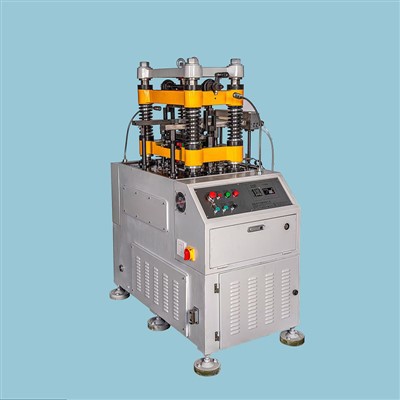
As a supplier of Automatic Roll Feeders, we offer a wide range of products that are suitable for handling materials with different surface textures. Our High - Speed Auto Loading Machine is designed for high - speed production lines and can handle a variety of materials, including those with smooth and rough surfaces. It features advanced tension control and roller design to ensure precise feeding.
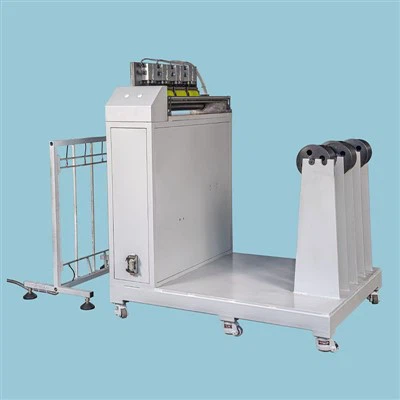
Our 5 - Spool Automatic Unwinding Machine is ideal for applications where multiple rolls of materials need to be fed simultaneously. It can handle materials with different surface textures, such as sticky tapes and porous fabrics, with its adjustable tension and speed control.
The Automatic Unwinder is a versatile machine that can be used for a wide range of materials. It is equipped with a user - friendly control system that allows for easy adjustment of the feeding parameters, making it suitable for materials with various surface characteristics.
Conclusion
In conclusion, an Automatic Roll Feeder can be used for feeding materials with different surface textures. With the right features, such as adjustable tension control, appropriate roller design, and speed control, these machines can handle a wide range of materials effectively. As a supplier, we are committed to providing high - quality Automatic Roll Feeders that meet the diverse needs of our customers.
If you are interested in our products and would like to discuss your specific requirements for feeding materials with different surface textures, we invite you to contact us for a procurement negotiation. We look forward to working with you to find the best solution for your manufacturing process.
References
- "Industrial Feeding Equipment: Principles and Applications" by John Smith
- "Material Handling in Manufacturing" by Mary Johnson
- "Advances in Automatic Feeding Technology" by David Brown