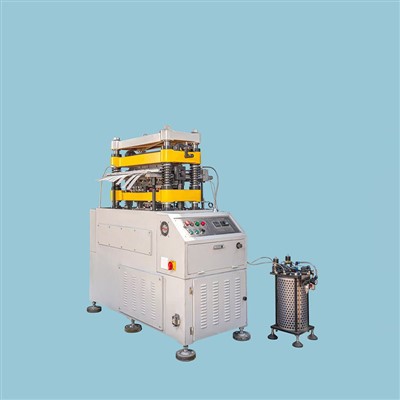
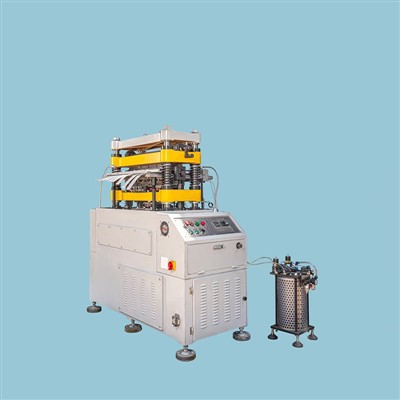
Precision Fin Forming Machines for Heat Exchanger Manufacturing-
Fin Forming Machines Built for Your Specific Profile, Material, and Target Output
Choosing a fin forming machine based only on catalog strokes-per-minute is a common mistake. A high advertised speed is useless if the system cannot maintain tight fin pitch tolerances, causes foil deformation, or leads to premature die wear.
We configure and build every fin forming system around your actual manufacturing requirements: fin drawing geometry, foil material and temper, pitch precision, daily output targets, and downstream coil assembly integration. This application-based engineering ensures you get a production-ready system fitted for your product, not just a standard catalog model.
-
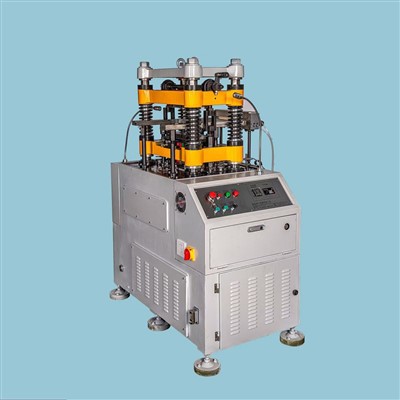
![High-speed Fin Forming Machine]() High-speed Fin Forming Machine
High-speed Fin Forming MachineThis high-speed fin forming machine is designed for small refrigeration units. It handles materials such as aluminum, copper, and stainless steel, and can easily produce both straight and louvered
-
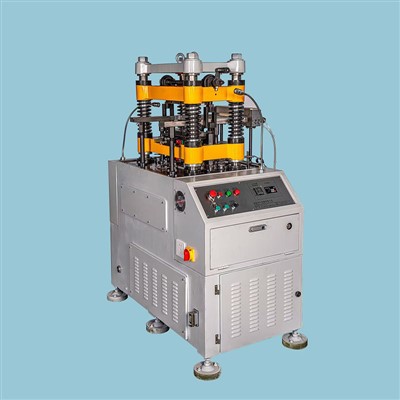
![High-precision Fin Forming Machine]() High-precision Fin Forming Machine
High-precision Fin Forming MachineYour clients need efficient cooling for cabinet air conditioners. Our high-precision fin forming machine meets that need. It processes aluminum, copper, and stainless steel, and supports wave-type
-
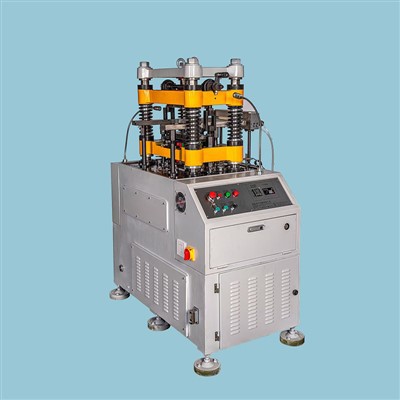
![Energy-saving Fin Forming Machine]() Energy-saving Fin Forming Machine
Energy-saving Fin Forming MachineThe medium industrial cooling market is growing rapidly. Our energy-saving fin forming machine provides the performance your clients need. It is suitable for commercial central air conditioning
-
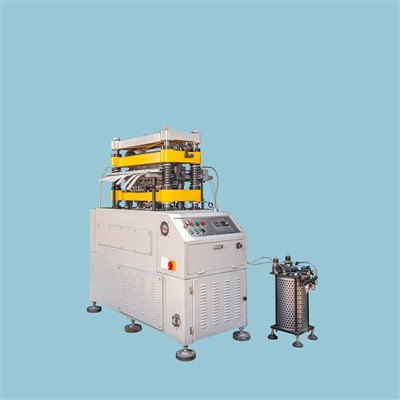
![Long-life Fin Forming Machine]() Long-life Fin Forming Machine
Long-life Fin Forming MachineIndustrial heat exchangers require durable and high-strength fins. Our long-life fin forming machine is designed to handle these demanding applications. It is suitable for large water chillers and
-
![High-efficiency Fin Forming Machine]() High-efficiency Fin Forming Machine
High-efficiency Fin Forming MachineLarge industrial systems demand high precision. Our high-efficiency fin forming machine is designed to meet these requirements. It is suitable for subway air conditioning systems, LNG cold boxes, and
-
![Fully Automatic Fin Forming Machine]() Fully Automatic Fin Forming Machine
Fully Automatic Fin Forming MachineSome applications require specialized equipment. Our fully automatic fin forming machine is designed for these conditions. It is used for nuclear radiators and aerospace heat exchangers. It processes


Matching Fin Forming Equipment to Your Actual Production Needs
|
Selection Factor |
What to Specify |
Why It Matters for Equipment Selection |
|
Fin Geometry & Profile Type |
Louvered, corrugated, plain, or serrated |
Determines the forming process, tooling structure, and machine configuration required to achieve the specified fin profile consistently. |
|
Material Specification |
Alloy grade, temper, thickness, and width |
Material properties affect forming force, feeding stability, tooling selection, and finished-fin dimensional consistency. |
|
Critical Dimensions |
Fin height, fin pitch, and louver angle |
These dimensions directly influence tooling design, feeding accuracy, forming consistency, and heat exchanger assembly compatibility. |
|
Production Volume |
Required linear output per minute or per shift |
Helps determine the appropriate forming speed, feeding capacity, tooling configuration, and overall production setup based on actual output requirements. |
|
Tooling & Die Requirements |
Progressive die design, carbide inserts, and required changeover speed |
Defines how the machine will handle the fin geometry, tool wear, maintenance requirements, and product changeovers during production. |
|
Material Feeding Method |
Servo tension control, decoiler capacity, and uncoiling specifications |
Stable material feeding and tension control help maintain consistent fin pitch and reduce feeding-related variation during continuous forming. |
|
Cutting & Collection |
Rotary or guillotine cut-off, automatic stacking, or tray collection |
Determines how formed fins are separated, handled, and prepared for downstream assembly while reducing manual handling where required. |
|
Factory Layout |
Machine footprint, operator clearance, and material handling flow |
Ensures the equipment can be safely installed and efficiently integrated with upstream material supply and downstream production processes. |

Our forming systems can be custom-tooling equipped for a wide range of thermal transfer profiles:
Louvered Fins Extensively used in automotive radiators, condensers, charge air coolers, and high-efficiency HVAC units where precise airflow interruption maximizes heat transfer density.
Corrugated & Wavy Fins Designed for heavy-duty industrial air coolers and oil coolers. Tooling maintains precise pitch consistency throughout long strip runs for smooth downstream core weaving.
Plain & Flat Fins Commonly applied in commercial refrigeration evaporators and standard finned-tube coils requiring straightforward geometry and reliable high-speed feeding.
Serrated & Special Profiles Engineered for specialized aerospace, defense, or high-performance industrial thermal management applications requiring unique surface configurations.
Custom & Non-Standard Profiles If your part drawing does not match off-the-shelf specs, submit your STEP or DWG files for engineering review. We evaluate material spring-back, forming stages, and progressive die layout to design custom tooling matched to your exact drawing.
Materials Processed
Commonly processed materials include:
Aluminum & Aluminum Alloys: 1100, 3003, 8011, and clad materials (typical thickness: 0.05 mm to 0.20 mm)
Copper & Brass Strip: High-conductivity alloys for refrigeration and heavy industrial cooling (typical thickness: 0.04 mm to 0.15 mm)
Stainless Steel & Specialty Alloys: 304, 316, and specialty grades for corrosive environments (requires reinforced press frames and heavy-duty tooling)
For non-standard alloys or ultra-thin foils, we recommend conducting a material trial run at our facility prior to machine sign-off.
How the Precision Forming Line Operates
[Step 1] Controlled Uncoiling & Tensioning The metal strip is fed from an uncoiler equipped with tension control to prevent sagging or stretching before entering the forming zone.
[Step 2] Servo Precision Feeding A high-accuracy servo feeder controls strip progression according to the preset fin pitch. Eliminating feeding backlash ensures pitch uniformity and prevents core assembly jams.
[Step 3] Progressive Tooling & Forming The forming press drives high-precision dies to form the fins, louvers, or waves in synchronized steps, maintaining tight dimensional tolerances across continuous runs.
[Step 4] Synchronized Cutting The formed fin strip is cut to length using an inline servo-driven cutting mechanism (rotary or shear blade) synchronized with strip speed to prevent burrs or edge collapsing.
[Step 5] Automated Stacking & Collection Finished fins are channeled into guiding channels for manual pickup or transferred directly onto automated stacking trays for immediate core assembly.
Precision Servo Feeding System Direct-drive servo feeding eliminates mechanical play, maintaining fin pitch tolerances within +/-0.02 mm across high-speed continuous operation.
Heavy-Duty Vibration-Damping Frame Cast iron or heavy welded steel press structures absorb high-frequency dynamic vibrations generated during rapid punching, maintaining die alignment and extending tooling life.
High-Precision Tooling Design Dies are constructed with high-grade tool steel (e.g., SKD11 or tungsten carbide inserts) to resist wear when processing abrasive alloys or high-volume orders.
Integrated Lubrication & Cooling Micro-dosing oil spraying systems apply uniform lubrication across the strip surface to reduce die friction, minimize burrs, and lower oil consumption.
PLC Control & Smart HMI Touchscreen Intuitive touchscreen interface allows operators to store product recipes, monitor real-time output, adjust cut lengths, and troubleshoot alerts quickly.

Applications Across Thermal Management
Our fin forming equipment supplies high-precision components for:
• Commercial & Residential HVAC Air conditioning evaporators, outdoor condensers, heat pump coils, and fan coil units.
• Automotive Thermal Systems Engine cooling radiators, A/C condensers, intercoolers, battery cooling plates, and oil coolers.
• Commercial & Industrial Refrigeration Cold room evaporators, supermarket display case coils, transport refrigeration, and chillers.
• Power & Heavy Industry Transformer oil coolers, generator air coolers, large-scale industrial radiators, and process heat exchangers.
Ready for an Engineering Review?
Skip generic price estimates. Provide your fin specifications and our engineering team will evaluate forming feasibility and recommend an optimal machine configuration within 24 hours.
Quote Checklist - What to Send Us:
• Fin Drawing or Sample Specs (PDF, DWG, STEP format)
• Material Type & Thickness (e.g., Aluminum 3003, 0.08 mm)
• Key Fin Dimensions: Fin Height, Fin Pitch, Width, and Louver Specs
• Target Production Output (Meters/minute or Fins/hour)
• Preferred Automation Level & Factory Voltage Specs
FAQ
We are one of the most professional fin forming machine manufacturers in China, also support customized service with low price. We warmly welcome you to buy discount fin forming machine for sale here from our factory. If you have any enquiry about quotation, please feel free to email us.
Long life Fin Forming Machine, High speed Fin Forming Machine, fin forming machine