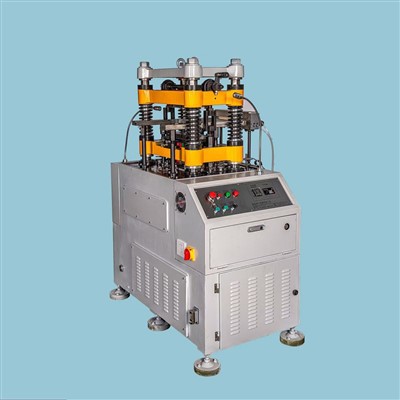
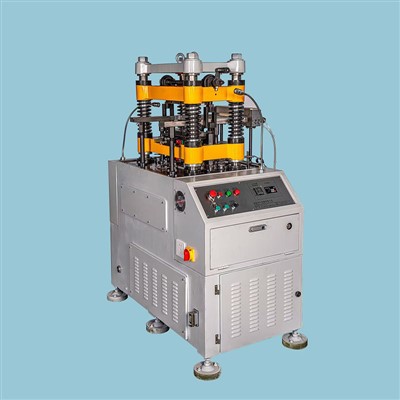
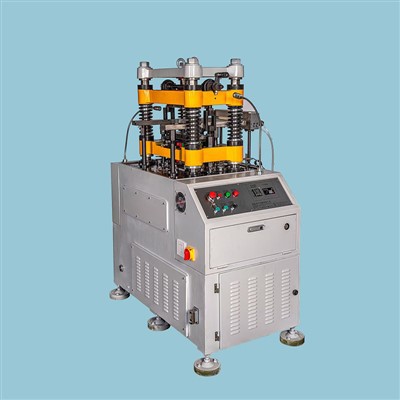
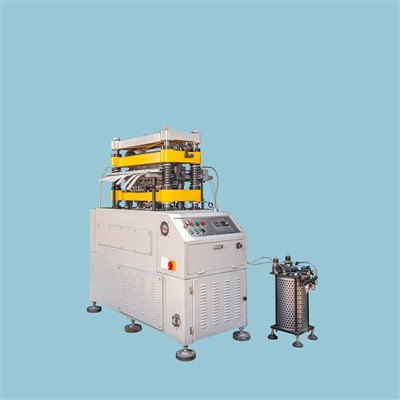
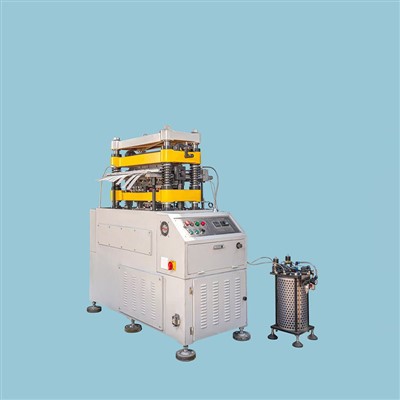
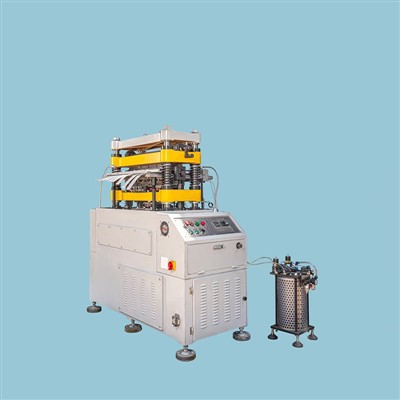
Radiator Fin Forming Machine for Automotive & Industrial Heat Exchangers
High-Precision Aluminum, Copper, Brass & Stainless Steel Strip Forming Lines Engineered Around Your Finished Fin Drawings
Our automatic Radiator Fin Forming Machine continuously converts precision metal coils into ultra-consistent folded fins for automotive radiators, condensers, evaporators, charge air coolers (CAC), and industrial intercoolers. Rather than selecting machinery based purely on motor horsepower or nominal line speed, we engineer every forming line around your actual fin drawing, material temper, and strict core assembly tolerances.
-
![Stainless Steel Fin Forming Machine]() Stainless Steel Fin Forming Machine
Stainless Steel Fin Forming MachineFor standard fin requirements, our stainless steel fin forming machine offers a reliable and cost-effective solution. It is suitable for small refrigeration and heat exchange units, including home
-
![Alloy Fin Forming Machine]() Alloy Fin Forming Machine
Alloy Fin Forming MachineThe commercial cooling industry requires stable and reliable production equipment. Our alloy fin forming machine is designed to meet these demands. It is suitable for cabinet air conditioner outdoor
-
![Thin Material Fin Forming Machine]() Thin Material Fin Forming Machine
Thin Material Fin Forming MachineThe medium industrial market is expanding rapidly, and our thin material fin forming machine is designed to help customers take advantage of this growth. It is suitable for commercial central air
-
![Durable Fin Forming Machine]() Durable Fin Forming Machine
Durable Fin Forming MachineIndustrial heat exchanger production requires both high speed and high precision. Our Durable Fin Forming Machine is designed to achieve a balanced performance between the two. It is suitable for
-
![Heat Exchanger Fin Forming Machine]() Heat Exchanger Fin Forming Machine
Heat Exchanger Fin Forming MachineLarge-scale commercial and industrial systems require exceptional precision and stability. Our heat exchanger fin forming machine is designed to meet these demands. It is suitable for subway air
-
![Condenser Fin Forming Machine]() Condenser Fin Forming Machine
Condenser Fin Forming MachineLarge-scale systems and high-end industries require stable and powerful production equipment. Our condenser fin forming machine is designed for demanding applications such as nuclear radiators,


Technical Specifications
|
Parameter |
Engineering Capability Standard |
Procurement & Quality Note |
|
Supported Materials |
Aluminum, Copper, Stainless Steel, Brass |
Supports full hard to soft tempers (e.g., AA3003-O/H14) |
|
Material Thickness Range |
0.05 mm – 0.30 mm |
Constant tension uncoiling prevents strip stretching |
|
Fin Height Range & Tolerance |
2.0 mm – 25.0 mm (Tolerance: ±0.02 mm) |
Ensures precise tube-to-fin gap for CAB brazing |
|
Fin Pitch Range & Tolerance |
1.0 mm – 8.0 mm (Tolerance: ±0.03 mm) |
Critical for smooth loading into automatic core builders |
|
Max. Strip Width |
Up to 100 mm (Customizable) |
Accommodates multi-row CAC and industrial cores |
|
Forming Speed |
0 – 150 m/min (Stepless frequency control) |
Speed adjusted based on material thickness and fin profile |
|
Cutting Method |
Synchronized Servo Guillotine / High-Speed Rotary |
Burr-free cut edge to eliminate brazing voids |
|
Tooling Steel Grade |
SKD11 / D2 / Cr12MoV |
Vacuum heat-treated to HRC 58–62 |
|
Tooling Changeover Time |
30 – 45 Minutes |
Modular cassette quick-change mechanism |
|
Control System |
Siemens / Mitsubishi PLC + Multi-Language HMI |
Industrial Ethernet interface ready for Industry 4.0 |

In heat exchanger manufacturing, minor dimensional deviations in fin pitch or height can cause core assembly failure or incomplete joint wet-out during Controlled Atmosphere Brazing (CAB). Our system addresses forming dynamics at every stage:
Coil Uncoiling with Tension Control -> Servo-Driven Strip Feeding -> Cassette Tooling Fin Forming -> Optical/Mechanical Pitch Calibration -> Synchronized Servo Cut-Off -> Automatic Fin Collection
Aluminum Alloys (0.05–0.30 mm): Specially ground forming rollers minimize surface micro-cracking and work-hardening on low-thickness foil (such as AA3003 and AA4343/3003 clad materials).
Copper & Brass Strips: Custom die clearances compensate for high material springback and higher yield strength, maintaining consistent fin leg perpendicularity.
Stainless Steel Alloys: Heavy-duty rigid forming stands and hard-alloy inserts withstand elevated localized forming stresses without machine deflection.
Core Engineering Features
30–45 Minute Quick Tooling Changeover (Modular Cassette System)
For radiator plants running multiple OEM part numbers daily, extended machine downtime reduces profitability. Our quick-change cassette tooling allows complete die swap-outs in under 45 minutes:
• Pre-aligned modular cassettes eliminate tedious manual micrometer adjustments during product switches.
• Precision slide-in docking mechanisms ensure immediate repeatable alignment between feeding rollers and cut-off blades.
• Ideal for flexible production environments manufacturing radiators, CACs, and condensers on a shared base line.
Premium Tool Steel Dies with HRC 58–62 Hardness
Forming rolls, side guides, and cutting blades are precision-machined from premium SKD11 / D2 tool steels and vacuum heat-treated to HRC 58–62. Integrated micro-dosing spray lubrication reduces die friction, extends sharp-edge service life, and prevents material galling during 24/7 continuous operation.
Burr-Free Cutting System (Servo Guillotine vs. Rotary Cut-Off)
• Servo Guillotine Cutting: Best for high-accuracy programmable cut lengths, complex louvered profiles, and applications requiring clean, burr-free end cuts.
• Rotary Cut-Off: Optimized for ultra-high-speed continuous forming lines where continuous strip synchronization is essential.
Both cutting systems feature micro-adjustable positioning to cut precisely along the fin crest without crushing or distorting the fin profile.
Component & Die Inspection: Dimensional verification of forming rolls, cut-off blades, and guide channels using optical coordinate measuring equipment.
Assembly & Electrical Testing: Comprehensive check of wiring, servo drive response, emergency stop safety circuits, and PLC control logic.
Dry Run & Continuous Trial: Full-speed mechanical endurance testing to monitor thermal stability, vibration, and noise levels.
Material Sample Trial Run: Testing the machine with your actual metal strip sample according to your fin drawing.
Finished Fin Quality Audit: Dimensional inspection of fin height, pitch, width, and cut length tolerances, complete with a video report sent for customer sign-off prior to shipment.

How to Request an Accurate Quotation
To enable our engineering team to evaluate your fin forming requirements and provide an exact quotation, please provide the following technical details with your inquiry:
• Fin Drawing / Specification: Corrugated, Louvered, Serrated, or Flat profile drawing.
• Material Specification: Alloy grade (e.g., Aluminum 3003), temper condition (e.g., H14/O-temper), and strip thickness.
• Key Dimensions: Required Fin Height, Fin Pitch, Strip Width, and Finished Cut Length.
• Target Production Output: Required meters per minute or total fins per hour.
• Downstream Integration: Manual collection or integration into an automated core building system.
Premium Tool Steel Dies with HRC 58–62 Hardness
Forming rolls, side guides, and cutting blades are precision-machined from premium SKD11 / D2 tool steels and vacuum heat-treated to HRC 58–62. Integrated micro-dosing spray lubrication reduces die friction, extends sharp-edge service life, and prevents material galling during 24/7 continuous operation.
Burr-Free Cutting System (Servo Guillotine vs. Rotary Cut-Off)
• Servo Guillotine Cutting: Best for high-accuracy programmable cut lengths, complex louvered profiles, and applications requiring clean, burr-free end cuts.
• Rotary Cut-Off: Optimized for ultra-high-speed continuous forming lines where continuous strip synchronization is essential.
Both cutting systems feature micro-adjustable positioning to cut precisely along the fin crest without crushing or distorting the fin profile.
Quality Control & Factory Acceptance Testing (FAT)
To guarantee machine performance prior to dispatch, every order follows a strict quality verification protocol:
• Component & Die Inspection: Dimensional verification of forming rolls, cut-off blades, and guide channels using optical coordinate measuring equipment.
• Assembly & Electrical Testing: Comprehensive check of wiring, servo drive response, emergency stop safety circuits, and PLC control logic.
• Dry Run & Continuous Trial: Full-speed mechanical endurance testing to monitor thermal stability, vibration, and noise levels.
• Material Sample Trial Run: Testing the machine with your actual metal strip sample according to your fin drawing.
• Finished Fin Quality Audit: Dimensional inspection of fin height, pitch, width, and cut length tolerances, complete with a video report sent for customer sign-off prior to shipment.
FAQ
We are one of the most professional radiator fin forming machine manufacturers in China, also support customized service with low price. We warmly welcome you to buy discount radiator fin forming machine for sale here from our factory. If you have any enquiry about quotation, please feel free to email us.
Heat Exchanger Fin Forming Machine, Condenser Fin Forming Machine, Durable Fin Forming Machine