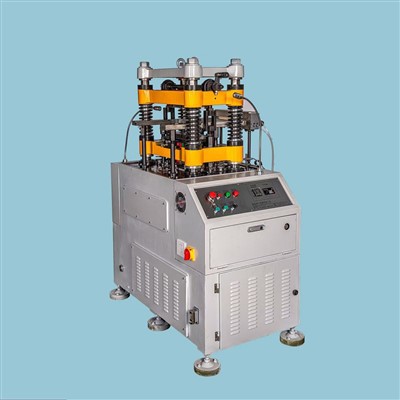
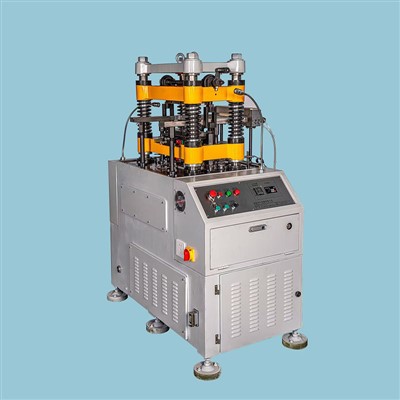
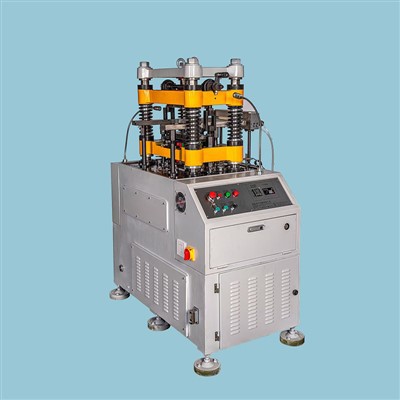
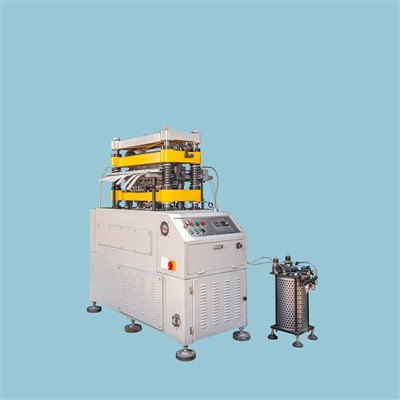
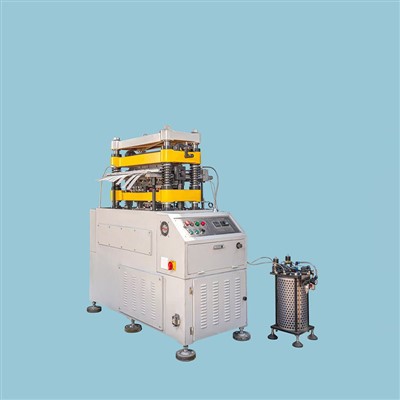
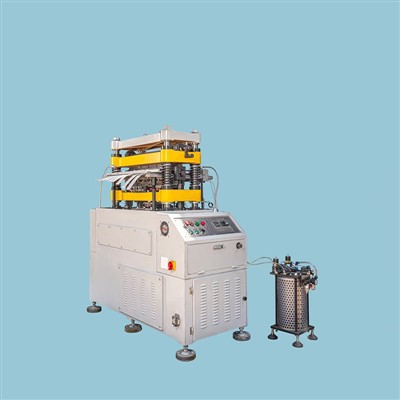
The appearance of fin forming machines is not merely about visual appeal, but rather about showcasing the functional aesthetics and practical considerations of industrial equipment through structural layout, proportions, and material processing. Its appearance is both an external reflection of its mechanical structure and a direct indication of ease of operation, maintenance, and safe operation, allowing viewers to immediately perceive its purpose and performance characteristics.
From an overall perspective, fin forming machines often have a long, narrow or L-shaped layout, extending along the production line. This design originates from the process flow of coil feeding, leveling, multi-stage rolling, cutting, and rewinding. The machine body is mostly welded from thick steel plates, with a surface treated with sandblasting or anti-rust paint, presenting a stable gray, blue, or industrial green hue, conveying a robust and durable feel. Larger models have a strong sense of scale, with thick columns and beams, giving a solid and reliable first impression, suggesting its ability to withstand the mechanical loads of high-speed continuous operation.
Function-oriented design language is evident in the details. The unwinding rack is typically located at the feed end, equipped with a rotatable arm and braking device. Its simple and streamlined structure facilitates loading, unloading, and tension adjustment of the roll material. The leveling device usually consists of a group of parallel rollers, with exposed parts polished or chrome-plated, the luster complementing the metallic color and highlighting the precision of the components. The roller assembly in the forming area is often enclosed by a semi-enclosed cover, preventing foreign objects from entering and visually creating distinct functional zones. Safety warnings and model markings are often printed on the cover surface, emphasizing its professional nature.
The cutting unit and take-up system are compactly arranged at the rear. The cutting mechanism is mostly hidden behind a protective plate, with only the action port exposed. The take-up table is flat and flush with or slightly higher than the ground, facilitating manual or automated handling and docking. A vertical control console is located on one side of the operating panel, with neatly arranged buttons and a display screen. The casing color coordinates with the machine body, and prominent functional colors are used to distinguish key commands such as emergency stop and start, balancing aesthetics and visibility.
Materials and processes give the appearance a more sophisticated feel. The welds on the main steel structure are polished smooth, reducing sharp edges and burrs, resulting in a refined look and feel. The rollers, due to hardening or plating, exhibit a delicate metallic sheen, creating a textural contrast with surrounding components. Some high-end models incorporate lightweight aluminum alloy trim on the covers or panels, reducing weight while enhancing sophistication, maintaining a modern feel despite the robust body.
The color scheme also carries subtle meaning. Industrial gray and dark blue are often used to emphasize stability and professionalism, while touches of bright colors like orange or yellow highlight safety warnings and key operational points, achieving a balance between functionality and visual comfort. The overall appearance avoids excessive ornamentation, yet through proportions, lines, and material combinations, it clearly conveys the power and reliability of the fin forming machine as a precision manufacturing tool.
It can be said that the appearance of the fin forming machine is a fusion of structural logic, functional requirements and industrial aesthetics. With its stable shape, clear functional division and exquisite material craftsmanship, it intuitively tells users that this is a professional machine designed for efficient, precise and durable fin forming.