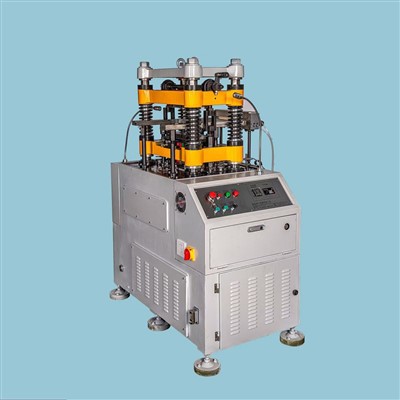
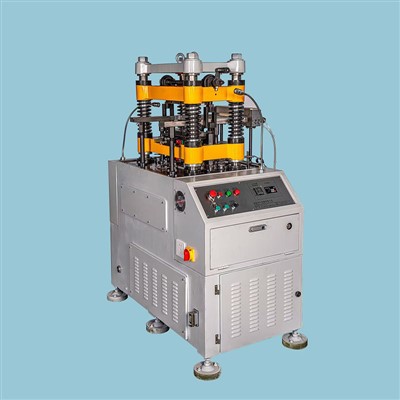
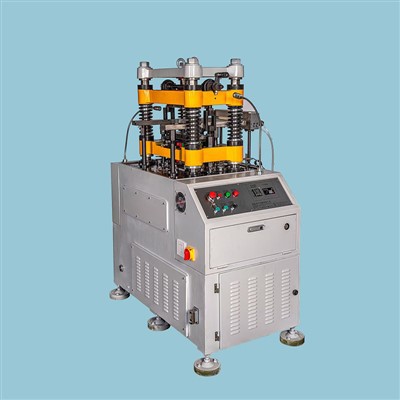
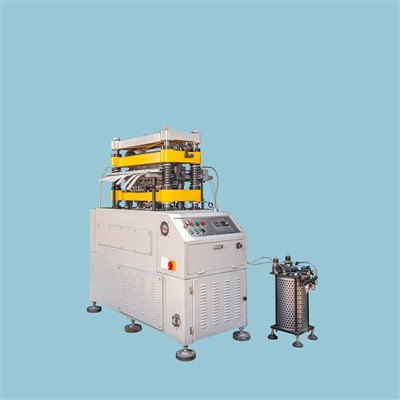
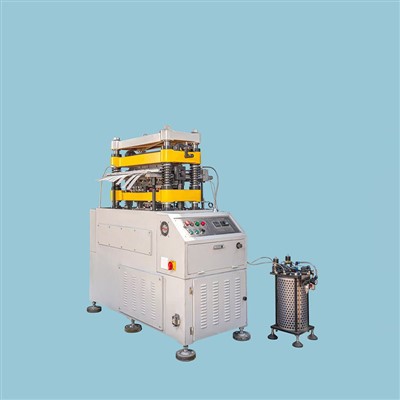
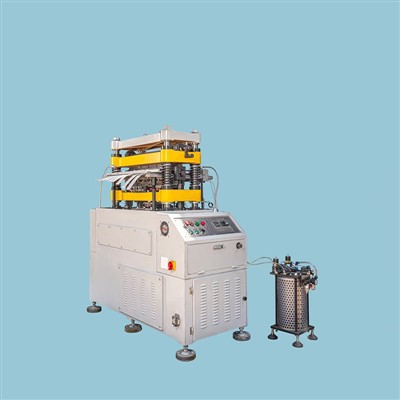
The scope of fin forming machines extends beyond the types and sizes of fins they can process; it encompasses the industries they serve, the materials they are suitable for, and the production models they can be integrated into. As specialized equipment that transforms sheet metal into regular fin structures, its capabilities are defined by mechanical design, process principles, and supporting systems, and it continues to expand into broader scenarios through continuous iteration.
From an industry application perspective, fin forming machines cover a wide range of fields, including refrigeration and air conditioning, automotive thermal management, home appliance manufacturing, energy equipment, and industrial cooling. In the refrigeration and air conditioning industry, it is a core piece of equipment on evaporator and condenser production lines, capable of mass-producing thin-walled aluminum foil fins to meet the heat exchanger's requirements for heat dissipation area and airflow efficiency. The automotive industry utilizes its ability to form thick plates or porous structures to provide high-strength fins for engine radiators, intercoolers, and battery thermal management systems, balancing heat dissipation and pressure resistance. In the home appliance sector, it serves heat exchange components in products such as refrigerators and water dispensers, helping to achieve compact structures and cost control. In energy and power equipment, fin forming machines can customize corrosion-resistant and temperature-resistant fin solutions for generator coolers, wind power converter heat dissipation modules, etc., to adapt to special operating conditions.
In terms of material range, fin forming machines can process a wide variety of metals. Lightweight, high thermal conductivity materials such as pure aluminum and aluminum alloy foil are the most common processing targets. These materials have good ductility and low forming resistance, making them suitable for high-speed continuous roll forming production. Copper and copper alloys, due to their superior thermal conductivity, are often used in high-end heat exchange applications; the equipment needs to adjust the roll profile and pressure parameters to accommodate their higher yield strength. For stainless steel, galvanized sheet, or surface-coated sheet, the forming machine can also achieve stable forming thanks to adjustable roll forming curves and servo drives, although processing speed and lifespan management need to be optimized accordingly. Some special alloys, such as titanium alloys or corrosion-resistant aluminum alloys, are occasionally used in high-end equipment, requiring the equipment to have higher rigidity and precise temperature control capabilities.
In terms of product size and structural range, fin forming machines can cover a variety of designs, from narrow, dense fins to wide, sparse fins, and from single corrugations to composite hole and flange structures. Corrugation pitch, corrugation height, hole position, and flange angle can all be set according to requirements, and multiple product variations can be achieved on a single machine by changing rollers or molds. This not only meets the needs of standardized large-scale production but also adapts to small-batch customization and new product trial production.
Regarding production mode, fin forming machines can operate independently or be integrated into fully automated continuous production lines, connecting with processes such as unwinding, cleaning, brazing, and assembly to form a complete integration from raw materials to finished heat exchangers. The connected mode improves production cycle time and consistency, while the stand-alone mode retains the advantages of flexible debugging and rapid changeover, facilitating parallel production of multiple products or R&D verification.
Overall, the scope of fin forming machines is defined by the industries they span, the materials they are suitable for, the structures they form, and the modes they are integrated into. It can achieve efficient mass production of conventional bulk products, and also demonstrate customization capabilities in special industries and high-end applications. This makes it an indispensable part of the thermal management equipment manufacturing chain, and its application scope will continue to expand with the development of new materials and new processes.