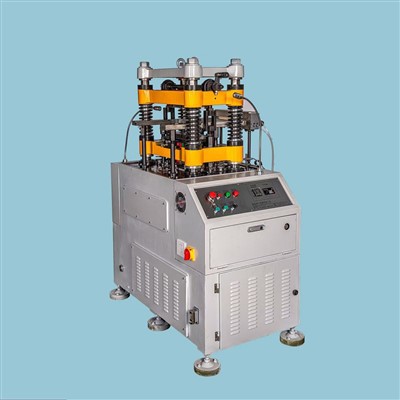
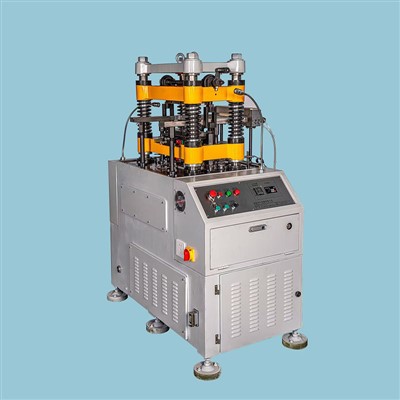
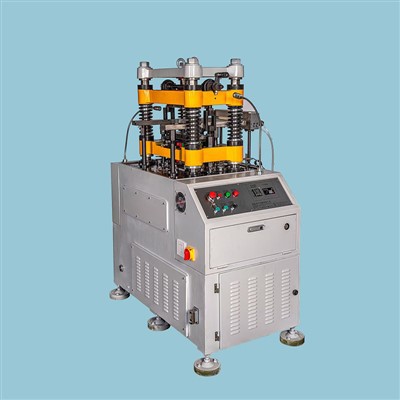
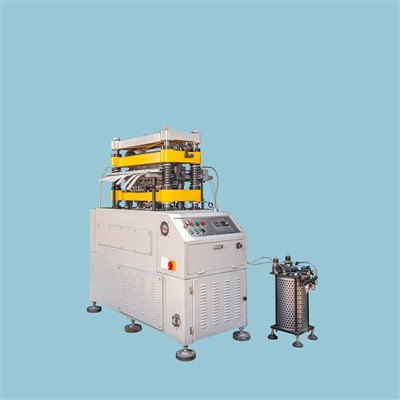
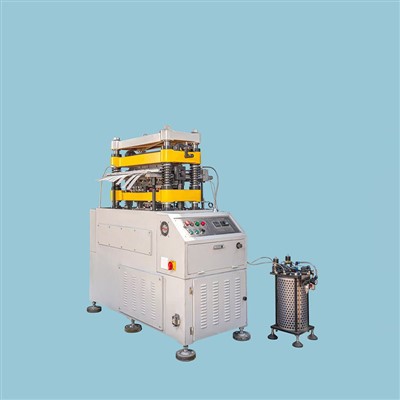
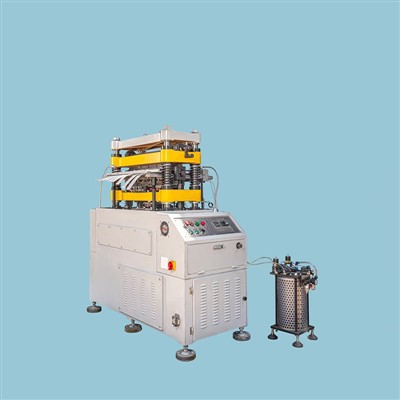
A servo cutting machine is a device that uses a servo motor as its power core to achieve fixed-length or fixed-shape cutting of materials through precise position and speed control. It upgrades the coarse positioning of traditional mechanical cutting to high-precision programmed operation, becoming an important piece of equipment for improving cutting quality and production efficiency in industries such as metal processing, plastic pipes, composite materials, and textiles.
From a working principle perspective, a servo cutting machine relies on a servo motor to drive a ball screw or synchronous belt mechanism, causing the cutter to move along a predetermined trajectory. After receiving length or shape commands, the control system uses an encoder to provide real-time position feedback signals, forming a closed-loop adjustment that ensures the cutter remains at the set point even at high speeds, with errors controlled within a very small range. Compared to the traditional clutch and limit switch method, servo control offers advantages such as fast response, accurate positioning, and the ability to frequently start and stop without accumulating errors. The cutter's movement is often synchronized with the feeding mechanism. For example, during continuous feeding of pipes or sheets, the system determines the cutting timing based on pulse counting or external sensors, achieving seamless integration with the production line cycle.
Structurally, a servo cutting machine mainly consists of a servo drive unit, transmission mechanism, cutting blade assembly, clamping device, and control system. The servo drive unit determines motion accuracy and acceleration/deceleration characteristics; the transmission mechanism ensures smooth force transmission and minimal wear; the cutting blade assembly can select shearing, sawing, or hot cutting methods depending on the material type; the clamping device ensures the material does not shift during cutting; and the control system integrates a human-machine interface, parameter settings, and fault diagnosis functions. Some models are also equipped with laser length measurement or visual positioning, further improving first-piece yield and changeover convenience.
In terms of application features, the most prominent advantage of the servo cutting machine is its programmability and flexibility. Operators only need to input the target length, quantity, and speed on the touchscreen, and the equipment can automatically complete batch cutting, switching between different specifications at any time without mechanical adjustments. This feature is particularly suitable for multi-variety, small-batch production and applications requiring frequent product changes. High precision is also a significant highlight; for example, when cutting aluminum profiles, copper pipes, or plastic sheets, the length error can be consistently within a few tenths of a millimeter, reducing subsequent trimming and waste. Meanwhile, because servo motors can output higher torque at low speeds, the equipment's cutting ability for thick-walled or hard materials is superior to ordinary pneumatic or hydraulic cutting devices, resulting in a smoother cut surface.
In terms of energy saving and maintenance, servo cutting machines consume power only during operation, with low standby power consumption, making them more energy-efficient than continuously operating hydraulic systems. Servo drives eliminate the need for hydraulic oil changes and seal maintenance, reducing operating costs and environmental risks. Their modular design allows for quick replacement of wear parts and a longer mean time between failures (MTBF), helping to maintain continuous production line operation.
In terms of applicable industries, servo cutting machines are widely used for fin and pipe length cutting in the air conditioning and refrigeration industry, pipe and profile processing in automotive manufacturing, aluminum alloy or PVC profile cutting in the building materials industry, and precision cutting of various sheet and bar materials in packaging and furniture production. It can be used as a standalone machine or integrated into automated production lines, working in conjunction with feeding, marking, and welding processes to build efficient continuous manufacturing units.
Servo cutting machines, with servo control at their core, integrate precision transmission and intelligent programming. They offer advantages such as high precision, high flexibility, energy saving, environmental protection, and easy maintenance. In the context of modern manufacturing pursuing quality and efficiency, they are becoming the mainstream choice for cutting processes and providing reliable fixed-length and forming cutting solutions for many industries.