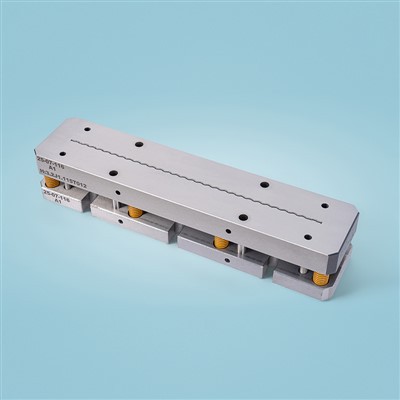
The applicable environment for a servo cutting machine refers to the physical space and working conditions that ensure its stable operation, maximize its precision advantages, and maintain a long service life. While its design possesses strong adaptability, achieving efficient and precise cutting operations still requires meeting basic requirements regarding temperature, humidity, vibration, dust, and power supply, and matching the production process's cycle time and layout.
Regarding temperature and humidity, servo cutting machines are suitable for operation in a constant temperature and humidity workshop environment. It is generally recommended that the ambient temperature be maintained between 5 and 40 degrees Celsius, the relative humidity not exceeding 85%, and that there be no condensation. Excessive temperature can lead to poor heat dissipation of the servo driver and motor, affecting output performance and even triggering overheat protection; excessive humidity may cause a decrease in the insulation of electrical components and corrosion of metal parts, increasing the probability of failure. For applications requiring extremely high precision, air conditioning or local temperature control equipment can be used to reduce the impact of thermal expansion and contraction on positioning accuracy.
Vibration and shock environments also require careful consideration. The transmission and guiding components of a servo cutting machine require high foundation stability. If installed near large stamping equipment or heavy machinery, continuous low-frequency vibrations can damage the fit between the lead screw and guide rail, leading to positioning drift. Ideally, the installation location should be far from strong vibration sources, or vibration damping pads and rigid supports should be added to the equipment base to ensure stable support. For applications requiring vibration, rigid guide rails with better vibration resistance should be selected, and the transmission distance should be shortened to reduce error accumulation.
Dust and oily environments can affect the cleanliness and heat dissipation of the equipment. Chips, metal powder, or plastic particles entering the guide rail, lead screw, or servo drive unit will increase frictional resistance and accelerate wear; oil may seep into electrical interfaces, causing short circuits or signal interference. Therefore, in woodworking, metal processing, or dusty production lines, servo cutting machines should be equipped with sealed protective covers and effective dust extraction devices, and critical parts should be cleaned regularly. In scenarios with a high risk of liquid splashing, splash guards and drainage structures should be added to protect the electrical and transmission systems from corrosion.
Power quality is another key factor affecting the stability of a servo system. The equipment should use a power supply line with stable voltage and frequency conforming to the nameplate requirements, avoiding sharing the same circuit with interference sources such as welding machines and high-power frequency converters. When conditions permit, voltage regulators and filters can be configured to suppress surges and high-frequency noise, preventing control signal distortion or driver malfunction. Grounding must be reliable, and the grounding resistance should meet relevant safety standards to ensure personal and equipment safety.
Spatial layout and logistics integration are also part of the applicable environment. Servo cutting machines need sufficient operating and maintenance space for easy tool replacement, transmission component repair, and chip removal. Feed and discharge channels should be kept unobstructed and matched to the cycle time of preceding and following processes to reduce material accumulation or idling. For automated lines requiring multi-machine linkage, the layout of communication cables and air lines should also be considered to avoid cross-interference and maintain cleanliness and order.
The applicable environment for servo cutting machines encompasses various conditions, including suitable temperature and humidity, controlled vibration, cleanliness and dust prevention, stable power supply, and a reasonable layout. Under the premise of meeting these basic requirements, it can operate stably in production lines of multiple industries such as metal processing, plastic pipes, and building materials, and its high precision and high flexibility help to achieve efficient connection and quality assurance of production processes.