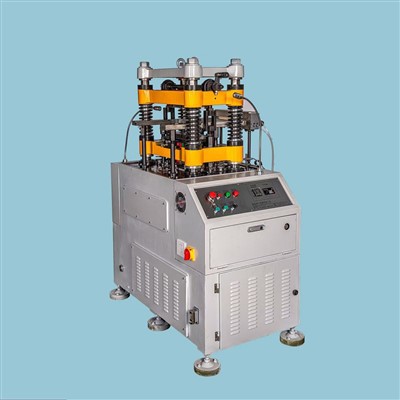
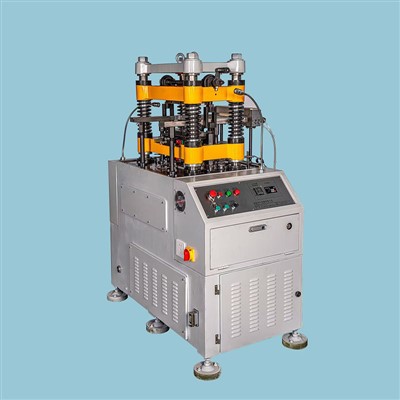
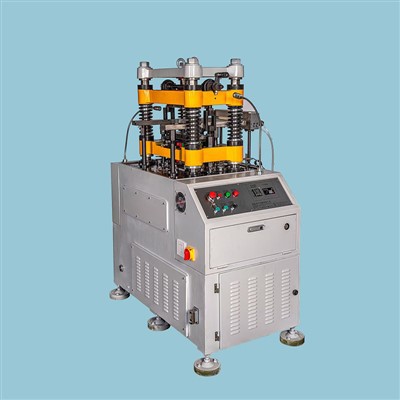
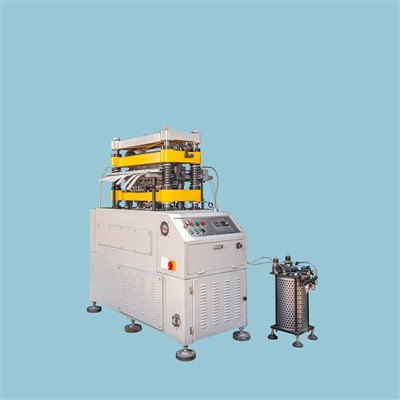
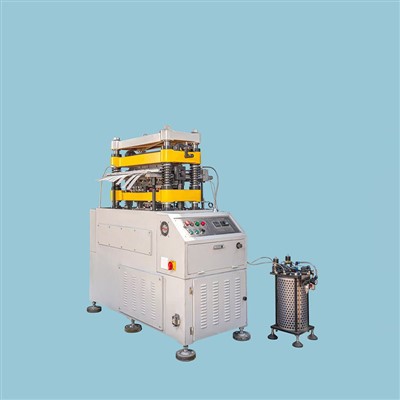
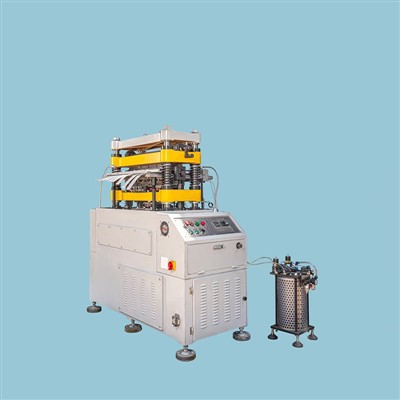
An automatic feeder is an intelligent material supply device designed for continuous production processes. Its main function is to automatically and smoothly feed rolled, stacked, or bulk raw materials into downstream processing units according to a set rhythm and position, thereby replacing manual feeding and improving production cycle time and consistency.It is widely used in metal processing, plastic film, textiles, and electronic component assembly, and is a crucial foundational equipment for achieving automated production lines.
Structurally, an automatic feeder typically integrates a storage unit, a conveying and guiding mechanism, a tension control device, a positioning detection system, and an electrical control module. The storage unit is designed according to the material's shape, such as a roll support, a tray lifting platform, or a hopper, and can store raw materials within a certain range, reducing the frequency of material changes. The conveying and guiding mechanism is responsible for leading the material from the storage location and guiding it to the processing entrance. Common methods include roller conveyors, belt traction, or pneumatic pushing. Its surface material and shape are optimized for the material's softness, thickness, and surface characteristics to prevent scratches or deformation. Tension control devices are particularly important in roll material applications. Using magnetic powder brakes, servo motors, or pneumatic constant tension systems, they maintain uniform tension on the material during transport, preventing deviation, stretching, or wrinkling caused by slack or excessive tightness.
Positioning detection systems are crucial for ensuring feeding accuracy. Photoelectric sensors, proximity switches, or visual recognition devices monitor the material's position, edges, or markings in real time. Once a deviation is detected, it is fed back to the control system for adjustment, ensuring that the starting point of the material entering the processing area remains consistent each time. For multi-specification mixed-line production, different positioning modes can be preset for rapid switching without affecting the cycle time. The electrical control module typically consists of a programmable logic controller (PLC) and a human-machine interface (HMI). Operators can set parameters such as feeding speed, single feeding length, and interval time on the interface, and can view the operating status and alarm information in real time.
The working principle of an automatic feeding machine relies on closed-loop control and multi-mechanism coordination. The control system initiates conveying and tension adjustment actions based on demand signals from downstream equipment or internal timing, smoothly guiding the material out and maintaining an appropriate speed and tension as it enters the processing stage. If the system detects that material is about to run out or an anomaly occurs, it will issue an early warning and execute a deceleration, shutdown, or material replacement process to reduce production interruptions caused by material shortages. In some high-precision applications, the system can also interface with a higher-level production management system to achieve batch traceability and data recording, providing a basis for quality control.
Its advantages lie in significantly improving production efficiency and product consistency. Manual feeding is easily affected by fatigue and skill level, and speed and position inevitably fluctuate, while automatic feeding machines can operate stably for extended periods, with feeding errors controlled within a very small range. At the same time, it reduces labor costs and the risk of workplace injuries, especially in high-temperature, high-speed, or hazardous environments. For workshops with limited space, compact or mobile feeding machines can be selected and flexibly integrated into existing production lines.
Regarding maintenance, automatic feeding machines emphasize regular cleaning and lubrication, especially at the contact surfaces of the conveyor rollers and guide rails, to prevent dust and oil from affecting friction. Tension and braking components need to be checked for wear according to usage frequency and replaced promptly to ensure constant tension. Sensor windows should be kept clean to avoid false detections.
Automatic material feeders, with storage, conveying, tension control, and precise positioning as their core functions, achieve efficient, stable, and repeatable material supply through mechatronics design. They serve as both the "outpost" of automated production lines and a vital link between warehousing and processing, providing a reliable and scalable supply solution for modern manufacturing.