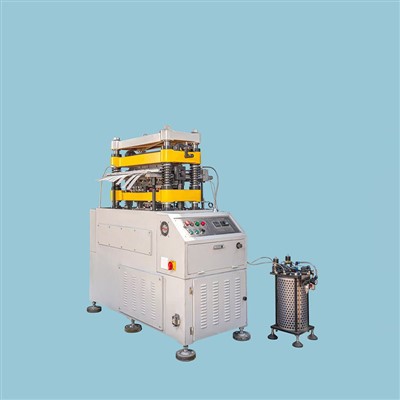
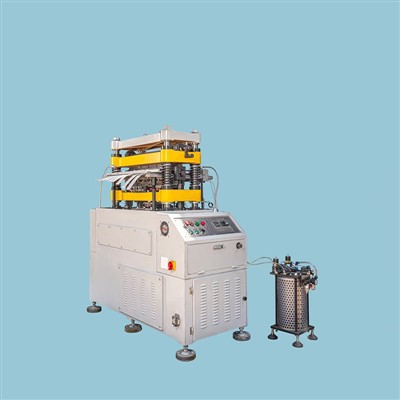
Automatic feeders play a crucial role in continuous production by ensuring a stable material supply. Their operational quality directly impacts the precision and efficiency of downstream processing. Due to the involvement of multiple factors such as mechanical transmission, electrical control, and material characteristics, a series of precautions must be followed during use to prevent equipment failure, ensure personnel safety, and maintain long-term performance. These points apply throughout the entire process of installation, commissioning, daily operation, troubleshooting, and maintenance.
The installation environment is fundamental. The equipment should be placed on a flat, solid surface, away from vibration sources and strong electromagnetic interference, ensuring frame stability and uninterrupted sensor operation. Power supply connections must meet rated parameters and be equipped with appropriate overload and short-circuit protection. Proper grounding prevents static electricity or leakage risks. For roll-type feeders, ensure the placement location facilitates loading and unloading of rolls and provides sufficient space for threading and maintenance, avoiding operational errors or personnel collisions due to cramped conditions.
Material preparation and loading require caution. Different materials, thicknesses, and widths of raw materials require different tension, guiding, and clamping methods. Before loading, confirm parameter settings and hardware compatibility to prevent breakage from excessive tightness or deviation from the correct alignment. When loading material rolls, ensure they are centered and fixed to avoid eccentric rotation that could generate additional radial force and damage bearings or guide rails. For easily slipping or scattered materials, install side guards or pressure plates to maintain a neat posture during conveying.
Strictly adhere to operating procedures. Before starting, check that the emergency stop button, protective cover, and interlocking devices are intact, and confirm that all sensors have clear visibility and normal signals. Do not put hands or tools into the conveying and cutting areas during operation; even at low speeds, consider it a danger zone. If jamming or abnormal response occurs, immediately stop the machine for troubleshooting; do not force continued operation to avoid further damage or safety accidents. When changing product types or specifications, empty the material channel and reset parameters before conducting a trial run to ensure that the feeding position and tension meet process requirements under the new conditions.
Tension and speed are the core variables affecting the quality of material discharge. Excessive tension may stretch materials or accelerate component wear, while insufficient tension can easily lead to wrinkles, misalignment, or even material slippage. A reasonable tension range should be determined based on material sample testing, and the instrument or display values should be observed regularly during operation; any drift should be adjusted promptly. The speed setting should match the cycle time of downstream equipment; sudden acceleration or deceleration will generate inertial shocks, affecting positioning accuracy and increasing mechanical load.
Daily inspections are essential. Pay close attention to the wear of conveyor rollers and guide rails, the amount of grease at lubrication points, the air circuit sealing, and the tightness of electrical connections. In dusty and humid environments, increase cleaning frequency to prevent dust from entering bearings or adhering to sensor surfaces, causing false detections. If signs of aging hoses, loose joints, or abnormal bearing noise are found, address or replace them promptly to avoid malfunctions and shutdowns.
Personnel training and emergency preparedness are equally important. Operators and maintenance personnel should be familiar with the equipment's working principles, control interface, and alarm meanings, and master the correct procedures for emergency stops and power outages. Commonly used spare parts and tools should be readily available on-site, and a concise troubleshooting process should be established to ensure rapid response and minimize downtime in the event of anomalies.
Considerations for automatic feeding machines cover multiple dimensions, including environment, materials, operation, parameters, inspection, and personnel. Following these points can not only reduce the probability of failure and safety risks but also extend equipment life, maintain continuous and stable feeding capacity, and provide reliable support for the efficient operation of automated production lines.