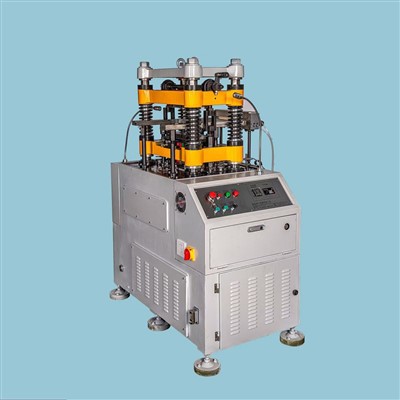
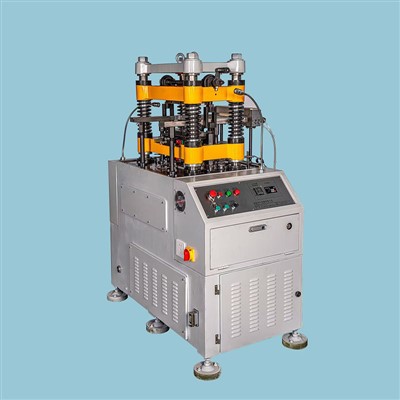
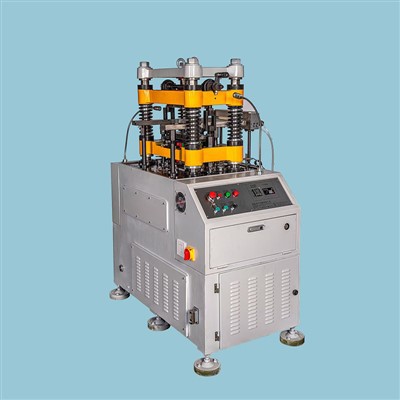
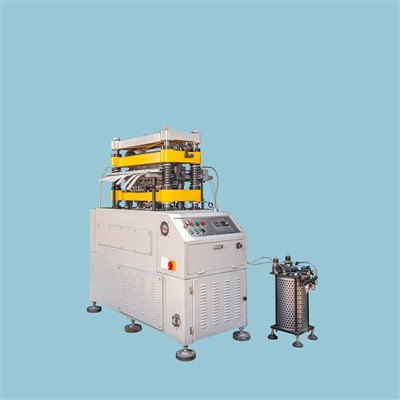
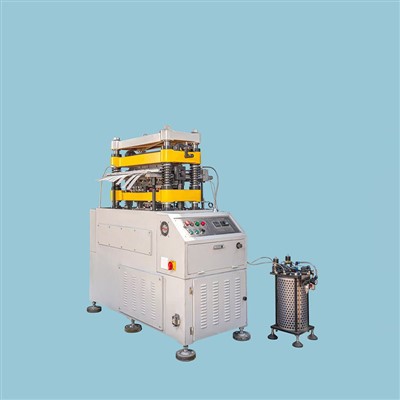
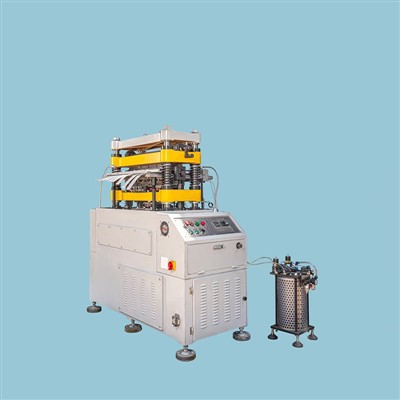
As a crucial front-end equipment in automated production lines, automatic feeding machines are characterized by their mechanical structure, control methods, sensing capabilities, and system integration. They enable efficient, stable, and repeatable material supply in continuous production. Understanding these features helps to fully leverage their functionality in production design and ensure good integration with upstream and downstream processes.
In terms of mechanical structure, automatic feeding machines are designed to adapt to different material shapes and working conditions. For roll materials, they employ center or surface drives combined with adjustable guide rollers to maintain constant linear speed and uniform tension during unwinding, preventing material stretching or wrinkling. For sheets, plates, or irregularly shaped parts, they utilize vacuum adsorption, pneumatic grippers, or roller pushing to achieve non-destructive gripping and directional conveying. Storage units are often designed with lifting, rotating, or automatic roll-changing structures to reduce manual intervention and improve capacity utilization within limited space.
The intelligent control system is a significant technical feature. Modern automatic feeding machines commonly combine programmable logic controllers (PLCs) with servo drives to achieve closed-loop regulation of speed, tension, and position. The servo system boasts fast response and precise positioning, instantly adjusting output torque based on changes in material diameter or load fluctuations to maintain feeding accuracy. Some high-end models incorporate motion control algorithms to suppress inertial impacts during acceleration and deceleration, resulting in a more stable initial material position-crucial for subsequent processes such as precision cutting, printing, or welding.
Sensing and detection technologies provide real-time status awareness. A multi-layered detection network, comprised of photoelectric sensors, proximity switches, encoders, and vision recognition devices, monitors roll weight, edge positions, material defects, and foreign object obstructions, feeding this information back to the control system for rapid response. For example, detecting impending roll depletion triggers deceleration or a material change signal, preventing idling waste and downstream material shortages. The vision system can also identify specific marks in complex backgrounds, enabling automatic alignment and correction, improving changeover flexibility.
Tension control technology is paramount to ensuring the quality of roll material feeding. Magnetic powder brakes, pneumatic constant tension devices, or direct-drive servo motors can achieve fine-grained tension management. Combined with a tension feedback loop, this can counteract tension drift caused by reduced roll diameter or speed variations. For different materials, such as easily stretchable metal foil or brittle films, the optimal tension range can be matched through parameter presets and adaptive algorithms, reducing material loss and equipment wear.
System integration and flexibility expand application boundaries. Automatic feeders can seamlessly interface with warehouse handling equipment, batching systems, or production management software, achieving full automation from raw material warehousing to online supply. Multi-specification recipe storage and quick recall functions allow for rapid parameter switching in mixed-line production, reducing downtime and debugging time. Compact or mobile designs provide convenience for space-constrained workshops while maintaining coordination with other workstations.
Furthermore, modern automatic feeders demonstrate technological considerations in safety and maintainability. Protective covers, interlocking devices, and emergency stop circuits ensure safe human-machine collaboration; modular structures facilitate the replacement of vulnerable parts, and centralized lubrication points and self-diagnostic functions reduce maintenance difficulty. Data acquisition interfaces support interconnection with MES or industrial IoT platforms, providing a foundation for operational analysis and predictive maintenance.
The automatic feeding machine integrates precise mechanical design, intelligent closed-loop control, multi-dimensional sensing and detection, and flexible system integration, making it highly efficient, stable, and adaptable in diverse production environments. It has become an important technological support for modern manufacturing to achieve continuous and high-quality production.