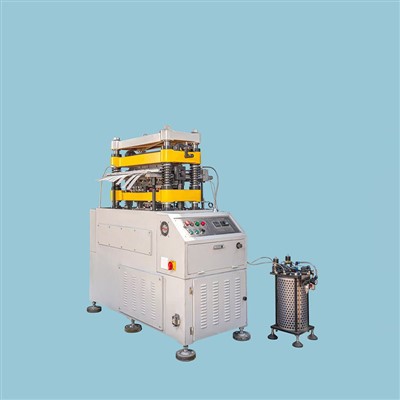
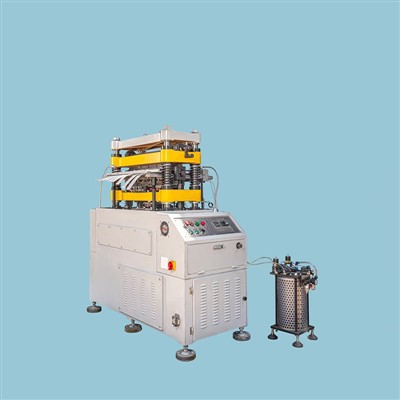
A mold is a specialized tool used in industrial production to shape products. It enables mass production with high precision and efficiency by giving materials specific shapes and dimensions.Molds are used in almost all fields involving the processing of plastic or liquid materials, from automotive parts and appliance casings to everyday plastic components; their presence is felt throughout all stages of modern manufacturing. Understanding the principles and characteristics of molds helps to recognize their core value in improving production efficiency and ensuring product consistency.
From a working principle perspective, molds utilize pressure, temperature, or other physical conditions to cause materials to flow, solidify, or solidify, thereby obtaining the desired shape. Injection molds inject molten plastic at high temperatures into a closed cavity, and after cooling, the finished product is demolded. Stamping molds use a punch press to apply pressure, causing sheet metal to separate or form between a punch and a die. Die-casting molds fill cavities with molten metal under high pressure, solidifying to form complex hollow or solid components. Different types of molds target different material properties and process paths, but they all share the common goal of solidifying design intent into a physical object through "replication."
Structurally, a mold typically consists of a cavity, core, guiding mechanism, ejector, and cooling or heating system. The cavity and core determine the outer contour of the product; the guiding mechanism ensures positional accuracy when the upper and lower molds close; and the ejector is responsible for smoothly removing the cooled or solidified product from the mold, preventing deformation or damage. The cooling system accelerates heat dissipation from the plastic or metal by arranging water channels around the cavity, shortening the molding cycle. The heating system maintains a constant temperature in certain thermosetting materials or large deep-cavity molding, ensuring sufficient material flow and solidification. Precision molds can achieve micron-level machining accuracy, resulting in dimensional stability and high interchangeability of the products.
Material selection is crucial in mold manufacturing. Commonly used materials include high-carbon, high-chromium alloy steel, cemented carbide, and surface-treated tool steel, which combine wear resistance, corrosion resistance, and high thermal stability, allowing them to withstand prolonged high-pressure, high-temperature operations. For different production volumes and product materials, mold materials and heat treatment processes are adjusted accordingly to balance service life and manufacturing costs. For example, mass production often uses high-wear-resistance steel with nitriding treatment, while small-batch trial production may utilize lower-cost, machinable materials for rapid prototyping.
Mold design and manufacturing integrate multidisciplinary knowledge from mechanical engineering, materials science, and manufacturing processes. Modern design often utilizes 3D modeling and simulation analysis to assess filling flow, cooling efficiency, and stress distribution in advance, reducing the number of trial moldings and development cycles. Advanced manufacturing technologies such as high-speed milling, EDM, and laser engraving improve the machining accuracy and surface quality of complex cavities, enabling the achievement of fine textures and high-gloss finishes.
In industrial production, molds are known as the "mother of industry," their quality directly affecting the product's appearance, dimensional accuracy, and production costs. A high-performance mold can achieve millions of stable molding cycles, significantly reducing unit costs and shortening delivery cycles. With the development of intelligent manufacturing, molds are also evolving towards digitalization, reconfigurability, and intelligent monitoring, providing stronger support for flexible production and personalized customization. Therefore, molds have always occupied an irreplaceable and fundamental position in modern manufacturing.