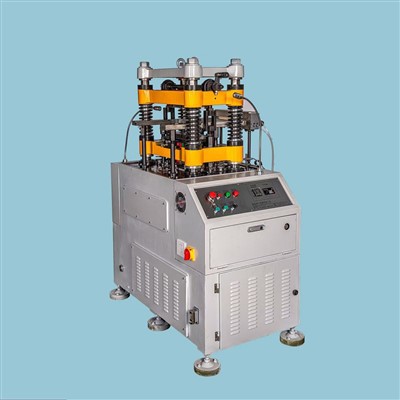
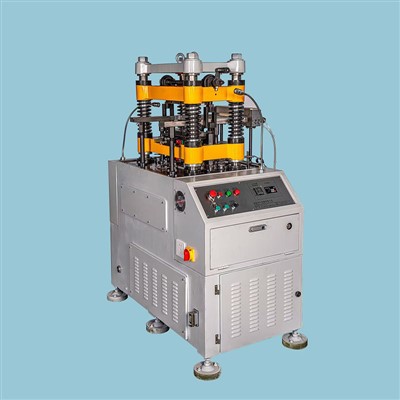
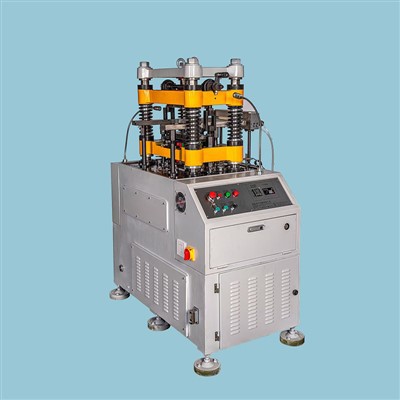
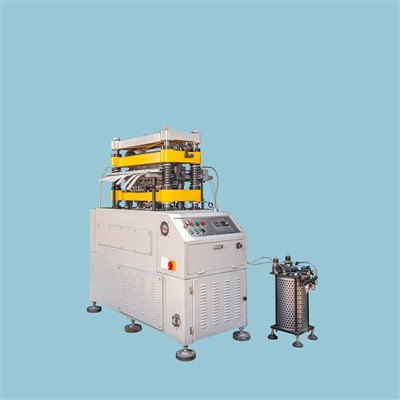
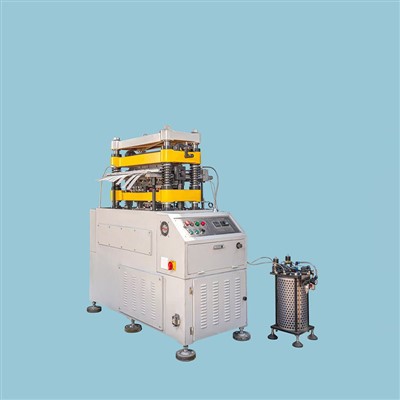
Using servo cutting machines involves mastering basic operating methods and then optimizing parameters, processes, and equipment characteristics to achieve higher precision, stability, and efficiency in cutting operations. It's not just about ensuring the machine operates normally, but also about maximizing its performance under varying production conditions, reducing waste and rework.
Familiarity with equipment characteristics is a prerequisite for mastering these techniques. Different models of servo cutting machines differ in maximum speed, acceleration, positioning resolution, and load capacity. Before first use, carefully read the instruction manual to understand the meaning and adjustable range of each parameter. For production lines that frequently change materials or specifications, pre-establish commonly used recipes in the control system and save cutting length, speed, and acceleration/deceleration curves as quick recall options to reduce errors caused by on-site input and ensure batch consistency.
Parameter settings must be matched to actual working conditions. The servo system allows adjustment of acceleration/deceleration slopes and operating curves. Setting the acceleration too high may generate inertial impacts at startup or shutdown, affecting positioning accuracy and even damaging the cutter; setting it too low will slow down the production cycle. The proven practice is to first make trial adjustments under no-load conditions, observing the positioning stabilization time and vibration, and then verify under typical loads to find a balance between efficiency and accuracy. For materials with large variations in thickness or hardness, the cutting speed can be appropriately reduced to allow the cutter more sufficient cutting time upon contact, reducing burrs and cross-sectional tilt.
Clamping and alignment are crucial factors affecting accuracy. Regardless of whether pneumatic, hydraulic, or mechanical clamping is used, it must be ensured that the workpiece does not slip or warp during the cutting process; otherwise, the actual cutting length will deviate from the set value. The clamping force should not be too large to avoid workpiece deformation affecting dimensions; nor should it be too small to avoid displacement during high-speed movement. For irregularly shaped or flexible materials, contour blocks or locating pins can be used to assist alignment, ensuring a strict correspondence between the feed start point and the cutter trajectory, thereby improving repeatability.
Observation and fine-tuning during operation are equally critical. During continuous operation, pay attention to changes in the sound and vibration emitted by the equipment. If more noticeable abnormal noises or positional deviations occur, stop the machine immediately and check the guide rail lubrication, cutter sharpness, and drive belt tension. Some models are equipped with a real-time monitoring interface to observe the position error curve and speed tracking rate. If a trend of deviation is detected, compensation or maintenance should be performed as early as possible, rather than waiting until dimensional tolerances are exceeded.
Utilizing automation and linkage functions can improve efficiency. In multi-machine collaborative production lines, servo cutters can be synchronized with feeding and sorting equipment via communication protocols to match the cutting rhythm with the upstream material speed, reducing waiting time and empty cuts. Combining fixed-length and counting modes enables unattended batch processing, while setting an appropriate buffer capacity prevents the equipment from slowing down due to insufficient downstream storage.
Safety and maintenance awareness are also part of the operating skills. Any adjustments and cleaning must be performed with the power off. The emergency stop button should be easily accessible, and its response speed should be checked regularly. Before the end of each day's workday, perform a simple test of the origin return and limit protection functions to ensure the equipment can stop immediately in case of abnormalities. Maintaining cleanliness and adequate lubrication of the guide rails and lead screws ensures the long-term sensitivity of the moving parts, preventing positioning lag due to obstruction.
The key to using a servo cutting machine lies in a deep understanding of the equipment's mechanism, precise matching of parameters and operating conditions, emphasis on clamping alignment and process monitoring, and full utilization of automation advantages. Integrating these principles into daily operation will not only ensure stable production of qualified products but also extend equipment lifespan, making high efficiency and precision the norm in production.