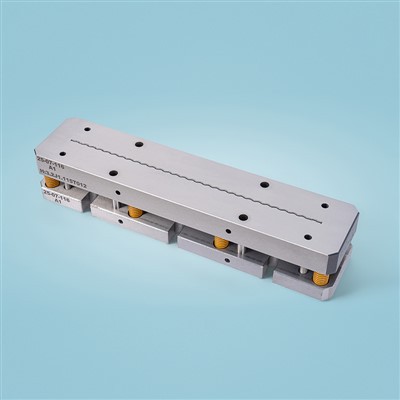
An automatic feeding machine solution refers to a holistic approach based on actual production needs. This involves rationally configuring equipment types, optimizing supporting systems, and introducing intelligent control and flexible processes to create a system capable of handling various materials, adapting to different production cycles, and ensuring stable operation. It's not merely about selecting individual machines, but a systematic design focused on the continuity, accuracy, and scalability of the feeding process. The aim is to address pain points such as low efficiency, frequent material changes, and positioning errors associated with manual feeding, providing reliable front-end support for automated production lines.
The material forms vary significantly across industries, so the solution must first address compatibility issues. For rolled materials, a constant tension feeding machine combined with center or surface drive can be used to ensure the material does not stretch or deform during high-speed unfolding. For sheets or plates, a flat feeder with vacuum adsorption or pneumatic clamping is recommended to avoid creases during handling. For loose materials or small components, a vibratory feeder and track alignment mechanism can be configured for orderly, sequential feeding. Through modular combinations, a single platform can cover multiple feeding methods, reducing redundant equipment investment.
In terms of operational stability, the solution needs to incorporate real-time monitoring and closed-loop adjustment mechanisms. Tension, speed, and position are key control parameters. With the help of servo drives and high-precision sensors, the system can dynamically correct deviations during operation. For example, it can fine-tune the guide roller angle when it detects a shift in the roll edge, or automatically update the feeding length calculation when the roll diameter changes, ensuring consistency at the downstream processing starting point. For multi-specification mixed-line production, a pre-set formula library can be used to achieve one-click parameter switching, significantly reducing changeover time.
Flexibility is the core of improving adaptability. Modern solutions often link automatic feeders with warehousing and handling systems. For example, AGVs or gantry robots complete the roll replenishment, and then the feeder undertakes the unfolding and conveying, forming an unmanned feeding chain. This not only saves manpower but also allows for the scheduling of raw materials over a larger area, alleviating localized material shortages. For workshops with limited space, compact or flip-up feeders can be selected and embedded into existing production lines without disrupting the layout.
Safety and maintainability must also be comprehensively considered in the solution. The external protective cover and light curtain ensure that personnel cannot enter the danger zone during operation. Emergency stop circuits and interlocking mechanisms must be integrated with the entire production line control system; any malfunction in any part will cause the entire line to stop. Maintenance convenience is reflected in the accessibility design of key components, such as easy-to-clean guide rails, rollers, and sensor windows. Lubrication points are centrally located and marked with cycle numbers, making daily maintenance efficient and feasible.
Data and information technology are important extensions of modern solutions. By installing a data acquisition module on the feeder, information such as material speed, tension curves, and alarm records can be uploaded to the MES or production dashboard in real time. Managers can remotely monitor the status, analyze trends, and provide early warnings of potential faults. This transparent management helps optimize cycle time scheduling and spare parts procurement, further improving overall capacity utilization.
The automatic feeder solution is a system strategy based on material characteristics, aiming for stable material supply, and integrating mechanical structure optimization, intelligent control, flexible connection, and information management. It not only solves current material supply bottlenecks but also reserves space for future production line upgrades, enabling enterprises to maintain efficient, accurate, and sustainable production capabilities under changing market demands.